What is Dark Sky Compliance and Why it Matters
Dark sky compliance has emerged as an important consideration in outdoor lighting, driven by the dark-sky movement’s mission to reduce light pollution. Poorly designed, aimed, or controlled outdoor lighting can affect ecosystems, nighttime visibility, astronomical observation, and neighboring properties. Proper fixture selection, placement, aiming, and controls can help minimize these effects.
At LED Lighting Supply, we’ve spent over 15 years helping customers select fixtures that balance visibility, security, and environmental considerations. LED outdoor lighting can provide effective illumination while reducing unnecessary uplight, glare, and light trespass when properly specified and installed.
What is Dark Sky Compliance?
Dark sky compliance generally refers to meeting applicable outdoor-lighting requirements intended to limit light pollution, glare, uplight, and light trespass. Requirements may come from local ordinances, development conditions, park or campus standards, or voluntary programs such as DarkSky International’s DarkSky Approved program. There is no single universal dark-sky standard that applies to every project.
A compliant installation is determined by the applicable project requirements and the installed lighting system – not by fixture type alone. Relevant factors commonly include fixture photometry, BUG rating, mounting height, aiming, orientation, shielding, lumen output, color temperature, controls, operating schedule, and the site’s lighting zone or jurisdiction.
- Fixtures selected and installed to control uplight, glare, and light trespass
- Color temperature that meets the applicable ordinance or program requirement; 3000K or lower is commonly required or preferred for many dark-sky-focused projects
- Appropriate light levels based on the task, site conditions, and applicable requirements
- Controls such as dimming, scheduling, photocells, or occupancy sensors where suitable
Why is Dark Sky Compliance Important?
Excessive or poorly controlled nighttime lighting can create concerns for people, wildlife, neighbors, and the night environment. Understanding these impacts helps explain why responsible lighting design matters.
Our circadian rhythms operate on approximately 24-hour cycles that help regulate essential functions throughout the body. Natural light is an important signal for these biological clocks, with humans and animals having evolved to respond to changing day-and-night patterns.
Artificial lighting and electronic displays can expose people to short-wavelength visible light after sunset. During daylight hours, light exposure can support alertness and attention. At night, light exposure – including short-wavelength-rich light – may interfere with melatonin timing and sleep for some individuals, depending on intensity, spectrum, duration, timing, and personal factors.
Disclaimer: This information is for educational purposes only and should not be considered medical advice. Consult with healthcare professionals regarding sleep or health concerns.
Screen time from devices can contribute to nighttime light exposure, while outdoor lighting is a source that property owners and designers can often control. Wildlife can also be affected by artificial light at night. Effects vary by species and setting, but lighting may alter movement, feeding, reproduction, migration, and predator-prey relationships.
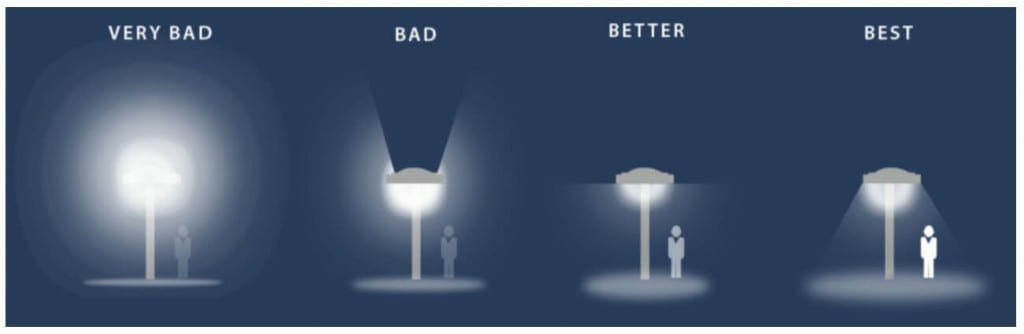
Consider a street light intended to illuminate pavement. If its distribution, aiming, or output sends light beyond the intended area or upward into the sky, it can create glare, light trespass, skyglow, and unnecessary energy use. Well-designed lighting directs illumination to the task area while limiting unwanted spill light.

What are the Benefits of Dark Sky Compliance?
Properly designed lighting can deliver multiple advantages beyond reducing light pollution.
Safety and Security
Excessive brightness, glare, and sharp contrast can reduce visual comfort and may impair nighttime visibility for drivers and pedestrians. Lighting designed with appropriate distribution, output, uniformity, and glare control can support visibility without unnecessarily illuminating adjacent areas or the sky.
Brighter does not automatically mean safer. Appropriate illuminance and good visual conditions depend on the application, surface conditions, fixture optics, mounting geometry, uniformity, glare, and user needs.
Wildlife Protection
Natural darkness supports ecosystems. Artificial lighting can affect plants and animals that depend on predictable light-dark cycles, particularly nocturnal species. Limiting unnecessary nighttime lighting, uplight, and light spill can help reduce these effects.
Warmer-color lighting may reduce short-wavelength content compared with higher-CCT white lighting, but ecological effects depend on the species, spectrum, intensity, timing, duration, and location. Where sensitive habitat is involved, follow applicable environmental guidance and project requirements.
Potential Health Benefits
Nighttime light exposure from outdoor lighting, screens, and other sources may affect sleep timing and quality for some people. Reducing unnecessary light entering homes and using appropriate controls can help limit unwanted nighttime exposure.
Dark-sky-oriented lighting practices can support a darker nighttime environment while still providing light where and when it is needed.
Environmental Impact
Environmental benefits extend beyond wildlife protection. Light directed outside the intended task area can represent wasted energy and associated operating costs. Targeted lighting and appropriate controls can reduce unnecessary energy consumption.
Rest and Recovery
Nighttime darkness is an important environmental cue for normal sleep-wake patterns. Limiting unnecessary exterior lighting and light trespass can help preserve darker conditions around homes, lodging, and other occupied spaces.
Star Visibility
Light pollution creates skyglow that obscures stars in urban and suburban areas. Controlling uplight and limiting unnecessary outdoor lighting can help preserve nighttime visibility of the sky.
Featured LED Wall Pack Lights
View our selection of full-cutoff LED wall pack fixtures for commercial and industrial applications. Verify the exact model’s photometric data, BUG rating, CCT, controls, and installation orientation against your project requirements.
Five Practical Tips for Working Toward Dark Sky Compliance
The dark-sky movement focuses on preserving natural night visibility while reducing energy waste, glare, and environmental light intrusion. The following strategies can help support an ordinance-compliant or dark-sky-conscious lighting design when applied to the specific site.
1. Choose Efficient, Controllable Lighting Technology
Modern outdoor LED fixtures can offer high efficacy, long service life, optical control, and dimming capabilities. Performance varies by model, so compare published photometric data, efficacy, controls, operating temperature range, and other specifications for the selected fixture.
Many municipalities are replacing existing lighting infrastructure with LED systems to improve energy performance and control capabilities. A conversion should still be evaluated for appropriate light levels, distribution, glare, and local code requirements.
2. Select an Appropriate Color Temperature
Color temperature describes the apparent warm or cool appearance of white light; it does not by itself establish dark-sky compliance. Many dark-sky ordinances and voluntary programs use 3000K or lower as a maximum or preferred CCT, while some environmentally sensitive locations require warmer sources. Verify the applicable local ordinance, program criteria, and project requirements.
Lower-CCT white light generally has less short-wavelength content than higher-CCT white light, but spectrum, intensity, timing, duration, and shielding also matter.
3. Minimize Light Waste
Illuminate only where and when light is needed through appropriate fixture placement, aiming, output selection, scheduling, dimming, and sensor integration. Smart controls that reduce output during low-activity periods can reduce unnecessary operation where appropriate.
Reducing excess lighting can lower operating costs and help limit glare, skyglow, light trespass, and potential wildlife impacts.
4. Use Properly Shielded and Aimed Fixtures
Fixtures with suitable optics, shielding, and installation orientation can direct light toward intended surfaces and limit uplight and glare. A shielded fixture alone does not ensure compliance: tilt, mounting location, output, and surrounding conditions can change its installed performance.
Review the fixture’s photometric report and installation instructions to confirm that its distribution and orientation meet project requirements.

5. Right-Size Your Lighting
Assess whether current outdoor fixtures provide more illumination than the task requires. Do not use wattage, CCT, or fixture count as a substitute for lighting design. Delivered foot-candles or lux depend on fixture output, optics, mounting height, spacing, aiming, reflectance, and site conditions.
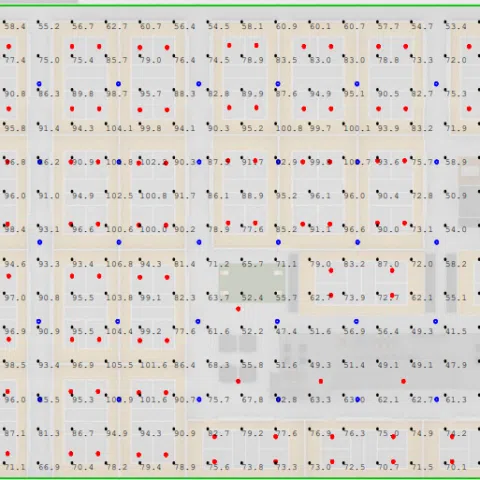
Fixture-specific photometric analysis using current IES files can help determine suitable output, placement, and light levels for the site while supporting applicable ordinance and operational requirements.
Four LED Lighting Fixture Categories That May Support Dark-Sky-Focused Designs
According to Dwayne Kula, our senior lighting specialist with over 15 years of experience in commercial lighting applications: “Dark-sky-friendly fixtures distribute light where it is needed while limiting unnecessary uplight, glare, and spill light.” The following fixture categories may be suitable when the selected model and installed design meet the applicable criteria:
- LED wall packs: Selected full-cutoff or downward-directed models can help limit uplight when mounted and aimed according to their instructions.
- LED shoebox lights (Parking Lot Lights): Available with distributions intended for roadway, parking, and area lighting; review BUG ratings and photometric performance for the planned mounting arrangement.
- LED street lights: Available with roadway-focused optical distributions that can limit unwanted light when properly selected and installed.
- LED wall sconces: Downward-directed models may help control spill light, while decorative up/down models may not meet all dark-sky requirements.
Frequently Asked Questions
How Do You Achieve Dark Sky Compliance?
Working toward dark-sky compliance involves several coordinated steps:
- Identify the applicable local lighting ordinance, development condition, lighting zone, and project requirements.
- Select fixtures using published photometric data, BUG ratings, CCT, output, controls, and installation limitations.
- Use fixtures and mounting orientations that limit uplight, glare, and light trespass as required by the project.
- Size light output and spacing using fixture-specific photometric analysis rather than excess brightness.
- Integrate dimming, scheduling, photocells, or occupancy controls where appropriate and permitted.
- Install fixtures at the specified height, orientation, and aiming angle, then verify field performance where required.
Installation Disclaimer: Electrical work should be performed by qualified electricians in accordance with local codes and regulations. LED Lighting Supply can help review fixture specifications and prepare photometric lighting plans, but the authority having jurisdiction and qualified project professionals determine code compliance.
What BUG Rating is Recommended for Dark Sky Applications?
BUG ratings measure a luminaire’s Backlight, Uplight, and Glare classifications. There is no universal BUG rating for all dark-sky applications. Acceptable BUG limits depend on the applicable lighting zone, local ordinance, property line conditions, mounting configuration, and project criteria.
Low-uplight fixtures are commonly important for dark-sky-focused projects, but a BUG rating must be reviewed with the fixture’s photometry and the planned installation. Consult the governing ordinance or project lighting professional for the applicable limits.
What Color Temperature is Best for Dark Sky Compliance?
Color temperature requirements depend on the governing ordinance or program. Many dark-sky-focused projects use 3000K or lower, and some sensitive locations may call for 2700K, amber, or other specialized spectra. CCT alone does not establish compliance; fixture distribution, output, controls, and installation also matter.
Expert Support for Your Dark Sky Lighting Project
Our experienced lighting specialists bring over 15 years of expertise to outdoor lighting projects. We can review fixture specifications, compare published BUG ratings and photometric files, and prepare lighting plans using project information supplied by the customer.
We understand the technical specifications behind BUG ratings, DarkSky International program criteria, and local ordinance requirements. LED Lighting Supply can help identify products that match established project requirements, but local authorities and qualified project professionals determine ordinance and code compliance.
Contact our lighting experts to discuss your specific dark-sky lighting needs and explore solutions that balance performance, efficiency, and environmental responsibility.