The Cost of Not Converting to LED Lights
Converting to LED can deliver quantifiable returns that many facility managers underestimate. After 15+ years specializing in commercial lighting upgrades, we have documented energy savings that can range from 60-80%, with substantial maintenance-cost reductions in suitable applications.* As electricity rates continue rising nationwide, facilities operating lights 12+ hours daily may see relatively short payback periods depending on utility rates, operating schedules, installation costs, incentives, and the selected equipment.
*Actual savings vary based on local utility rates, existing equipment, operating hours, installation costs, utility incentives, and the lighting design. Calculations should be based on the actual fixture input wattage and operating conditions.

1. Calculate Your Potential Energy Savings
Consider a standard 400-watt metal halide fixture common in parking lots and warehouses. Although the lamp may be rated at 400 watts, the ballast also consumes power. Total fixture input wattage can be approximately 455 watts, depending on the ballast and system condition.
We typically recommend LED replacements based on required light levels, distribution, mounting height, and application needs. In many applications, an LED fixture using 100-150 watts may provide comparable or improved useful illumination, but equivalent wattage should be verified with fixture-specific photometric data.
Real-World Energy Comparison
For a parking lot fixture operating 12 hours nightly, some customers select 100-watt LED fixtures producing 15,500 lumens, or 155 lumens per watt, to replace 400-watt metal halide units. The appropriate replacement should be confirmed through a lighting plan rather than lumen output alone.
Annual consumption breakdown:
- 400-Watt Metal Halide: 455 watts × 4,380 hours = 1,992.9 kWh yearly
- 100-Watt LED Replacement: 100 watts × 4,380 hours = 438 kWh yearly
Using $0.12 per kilowatt-hour as an example (rates vary significantly by region and utility):
- Metal Halide annual cost: $239.15 per fixture
- LED annual cost: $52.56 per fixture
- Potential annual savings per fixture: $186.59
100-fixture facility example:
- Metal Halide annual electricity: $23,915
- LED annual electricity: $5,256
- Potential total annual savings: $18,659
2. Reduce Maintenance Costs with LED Longevity
Beyond electricity savings, LED conversions can reduce much of the maintenance burden associated with traditional lighting systems. Maintenance-cost reductions can result from:
- Reduced replacement-part costs
- Lower labor expenses
- Fewer lift or equipment-rental events for high-bay installations
Understanding LED Lifespan Ratings
L70 Rating: L70 is the point at which projected LED light output declines to 70% of its initial output. It is not necessarily a fixture failure point. Published L70 life depends on the LED package, thermal design, operating environment, drive current, and the manufacturer’s test and projection methods.
Actual LED Life: Overall fixture life also depends on drivers, surge protection, controls, thermal conditions, and other components. Review the exact product warranty, rated life, ambient-temperature rating, and maintenance information for the selected fixture.
Maintenance Cost Comparison
Metal halide lamps commonly have rated lives around 10,000-20,000 hours, depending on the lamp and operating conditions, and they experience lumen depreciation during use. Over a long operating period, traditional systems may require multiple lamp replacements and may eventually require ballast maintenance or replacement.

Typical maintenance considerations over an extended operating period:
- Multiple metal halide lamp replacements, depending on rated lamp life and operating hours
- Possible ballast replacement or repair
- Labor costs, which increase with fixture height and accessibility
- Equipment rental or lift costs for high installations
Maintenance savings can be significant where access is difficult or lift equipment is required. Actual savings should include local labor rates, replacement parts, access equipment, operating hours, and the serviceability of the selected LED fixture.
3. Improve Light Quality and Color Rendering
LED quality extends beyond efficiency to Color Rendering Index (CRI), which measures how naturally colors appear under a light source compared with an appropriate reference source. CRI is expressed on a scale up to 100.
Higher-CRI lighting can improve color appearance in work and retail environments. High-pressure sodium fixtures commonly used in street lighting often have low CRI, creating the characteristic yellow appearance that can distort color perception.
Applications Requiring High CRI
Retail environments can benefit from strong color rendering because product presentation influences how merchandise appears. Car dealerships may use higher-CRI lighting to help present vehicle paint and interior details accurately.
Many commercial LED products offer CRI of 70 or higher, while selected products offer 90+ CRI for color-critical applications. The appropriate CRI depends on the task and application, from warehouses to showrooms.
4. Enhance Safety and Security
Well-designed lighting can support visibility, safety perceptions, and customer comfort. In parking areas, appropriate illuminance, uniformity, glare control, and fixture placement are important considerations for evening use.
LEDs typically depreciate more gradually than many traditional lamp systems, but their light output does decline over time. A lighting design should account for maintained light levels, fixture lumen maintenance, and the site’s required illuminance.
Quality LED installations combine:
- Light output and distribution appropriate for the application
- CRI selected for the visual task
- Fixture optics and placement designed to support uniformity while managing glare

5. Reduce Mercury-Lamp Disposal Needs
Fluorescent and HID lamps can contain mercury and may require recycling or other regulated handling. Disposal requirements vary by lamp type and jurisdiction, so commercial facilities should confirm applicable federal, state, and local requirements and use appropriate recycling providers.
Important: Broken mercury-containing lamps require careful cleanup. Commercial facilities should follow applicable EPA and local guidance and use trained personnel or qualified disposal services when appropriate.
Disposal Cost Considerations
Commercial recycling costs for fluorescent lamps vary by provider, lamp type, quantity, location, packaging, transportation, and local requirements. Large facilities can accumulate meaningful disposal and handling expenses over time.
LEDs do not use mercury to produce light, which can reduce the mercury-lamp disposal burden. However, LED fixtures and replacement lamps are electronic waste and may contain drivers, circuit boards, batteries, or other components that require recycling or special handling. Verify product-specific recycling guidance and local disposal requirements at end of life.
Why Choose LED Lighting Supply for Your Commercial Project
Selecting appropriate LED fixtures requires technical analysis that goes beyond basic product specifications. Our specialists evaluate your specific conditions, including:
- Ambient temperature ranges
- Mounting heights and accessibility
- Existing electrical infrastructure
- Required photometric performance
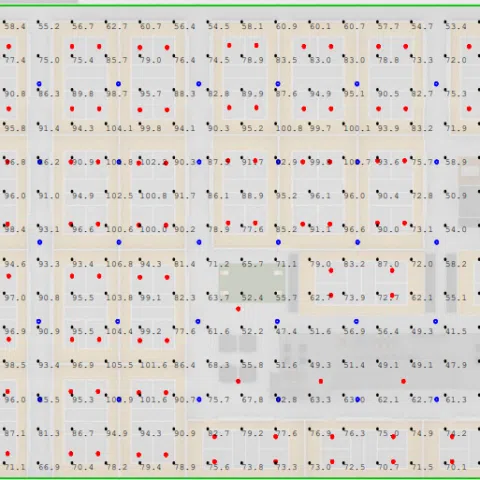
We provide complimentary custom lighting plans with fixture-placement and energy-use calculations tailored to your facility. This technical approach helps avoid common issues such as insufficient light levels, poor uniformity, excessive glare, or selecting fixtures not suited to the operating environment.
Our 15+ years of specializing exclusively in LED technology mean you receive recommendations based on real-world commercial applications rather than generic product suggestions.
Ready to calculate your potential savings? Contact our lighting specialists for a custom analysis of your facility’s conversion opportunities and available utility incentives.
Professional installation recommended. Qualified electricians should perform electrical work in accordance with local codes and safety requirements.