Lumen Depreciation and LED Lighting
When replacing lighting systems, the goal is to reduce operating costs while maintaining or improving light quality. Three primary strategies can help achieve this:
- Switching from less efficient lighting technology to LED
- Selecting appropriately qualified, efficient lighting fixtures, such as DLC-listed models where applicable
- Implementing dimming controls to reduce energy consumption
All lighting technologies – including Metal Halide, high-pressure sodium, fluorescent, and LED – experience lumen depreciation over time, though the rate and pattern of depreciation vary by technology, lamp or fixture design, operating conditions, and maintenance practices.
Many fluorescent and HID systems experience greater lumen depreciation and maintenance demands than modern LED systems, which is one reason facility owners are converting from fluorescent to LED systems.
Understanding Lumen Depreciation
Lumen depreciation refers to the gradual decrease in light output over a lighting product’s operational life. Several factors influence the rate of depreciation:
- Lighting technology type
- Total operating hours
- Ambient temperature conditions
- Operating schedule, including continuous operation
- LED drive current levels
- Installation environment factors
- Fixture thermal design, maintenance, and dirt accumulation
Performance Comparison: Modern LED luminaires can provide strong lumen maintenance when properly designed and operated within their published temperature limits. Fluorescent, metal halide, and high-pressure sodium products each have their own lumen-maintenance characteristics, so compare published manufacturer data for the specific products being considered.

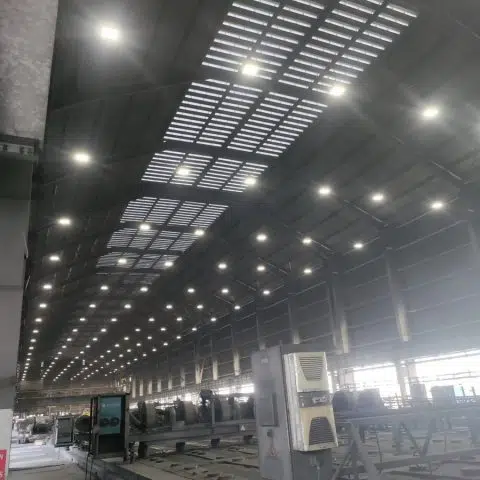
Example of an LED high bay fixture designed for long-term lumen maintenance
What is L70?
L70 is a lumen-maintenance value indicating the projected operating time for an LED light source or luminaire to reach 70% of its initial light output under stated test and operating conditions. In simpler terms, it identifies the point at which light output has depreciated by 30%.
Example: A fixture producing 20,000 initial lumens with a published L70 value of 50,000 hours is projected to produce approximately 14,000 lumens at 50,000 operating hours, subject to the product’s stated conditions and assumptions.
How is L70 Calculated?
LED lumen-maintenance projections commonly use IES TM-21, which applies mathematical extrapolation to LED test data collected under IES LM-80 methods. Rather than operating a product for decades, this process:
- Uses LM-80 lumen-maintenance test data for the LED package, array, or module at specified temperatures and drive currents
- Uses mathematical modeling to project long-term lumen maintenance
- Can project values such as L70, L80, L90, or L50, depending on the available data and reporting method
- Limits projection duration based on the amount of LM-80 test data available
Published L70 information should identify the applicable test conditions. A complete luminaire’s performance can also be affected by driver reliability, thermal design, optics, controls, and the installation environment.
What are Good L70 Numbers?
An L70 value of 50,000 hours or more is common for many commercial LED luminaires, but there is no single minimum L70 value that is appropriate for every project. Evaluate lumen maintenance alongside the required maintained light levels, operating hours, ambient temperature, warranty, driver specifications, and replacement or maintenance access.
How Does L70 Differ from L50 or L90?
These ratings indicate different levels of lumen depreciation:
- L50: Projected time to reach 50% of initial lumens
- L70: Projected time to reach 70% of initial lumens
- L90: Projected time to reach 90% of initial lumens
L70 is widely used when comparing LED lumen-maintenance projections, but the appropriate value for a project depends on the maintained illuminance target and the specific product data.
Does L70 Mean the Fixture Will Stop Working?
No. L70 only indicates a projected point at which the light output reaches 70% of its initial level. The fixture may continue operating beyond this point, although output can continue to decline and other components may fail independently.
Understanding L70 vs. Actual Fixture Life
An LED fixture with a published L70 value of 200,000 hours does not guarantee 200,000 hours of operation. Drivers, surge-protection devices, controls, wiring, optics, and other components can affect the service life of the complete luminaire.
Driver life varies by model, operating temperature, input power quality, loading, and installation conditions. Review the fixture warranty and manufacturer specifications rather than assuming a driver will last a particular number of hours.
When a driver fails, it may be possible to replace the driver or the entire fixture, depending on product design, parts availability, labor costs, warranty coverage, and available efficiency improvements.
Traditional Lighting Lumen Depreciation
Metal halide and high-pressure sodium lamps can experience substantial lumen depreciation, but their rated life and lumen-maintenance behavior are not the same. Values vary by lamp wattage, ballast type, burning position, operating cycle, and manufacturer.
- Metal Halide: Metal halide lamps often experience significant lumen depreciation during service life and may require scheduled group relamping in applications where maintained light levels are important.
- High-Pressure Sodium: High-pressure sodium lamps often have different, and in many cases longer, rated-life characteristics than metal halide lamps. Their lumen maintenance must be evaluated using the specific lamp’s published data.
- Rated life: Rated lamp life is a statistical lamp-survival measure, not a direct indicator of lumen depreciation or a guarantee that every lamp will operate for that duration.
Key difference: Do not assume that metal halide and high-pressure sodium lamps share a 15,000-hour rated life or that either reaches 50% light output at half of its rated life. Use manufacturer lumen-maintenance curves and rated-life data when designing or maintaining an HID lighting system.
Maintenance Factor Planning
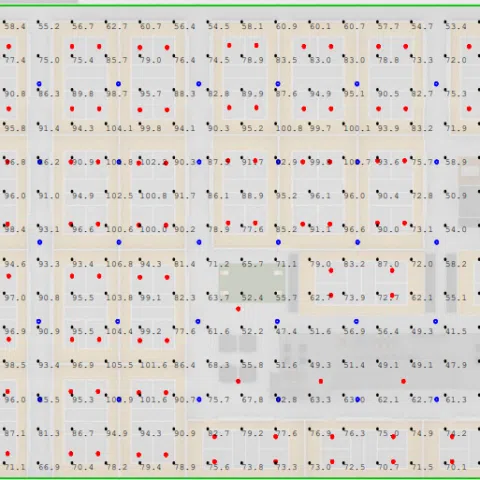
The maintenance factor estimates how much delivered light on the work plane may decrease over time in a lighting installation. This calculation is important for determining proper fixture quantities and planning maintenance schedules.
A lighting maintenance factor may account for lamp or LED lumen depreciation, fixture dirt depreciation, room-surface conditions, and other application-specific factors. Proper planning helps avoid:
- Inadequate lighting levels over time
- Arbitrary over-installation of fixtures without photometric support
- Unexpected maintenance costs and energy consumption
Professional Consultation: Lighting design and calculations should use fixture-specific photometric data and appropriate maintenance assumptions. Qualified lighting professionals, electrical professionals, and applicable project authorities should determine compliance with applicable codes and standards for the specific application.