LED Power Generation Lighting
- Fixture options for high-heat, hazardous, and general plant areas
- DLC-listed models available for utility rebate eligibility
- Application support for turbine halls, control rooms, and outdoor yards


Get Your Custom Lighting Plan With Product Recommendations
- Layout designed around control room visibility, outdoor switchyard coverage, and containment-area access lighting needs
- Fixture selection matched to harsh environment ratings, emergency backup requirements, and appropriate color temperature for critical task areas
- LED options can help reduce maintenance intervals in hard-to-access locations and lower energy consumption


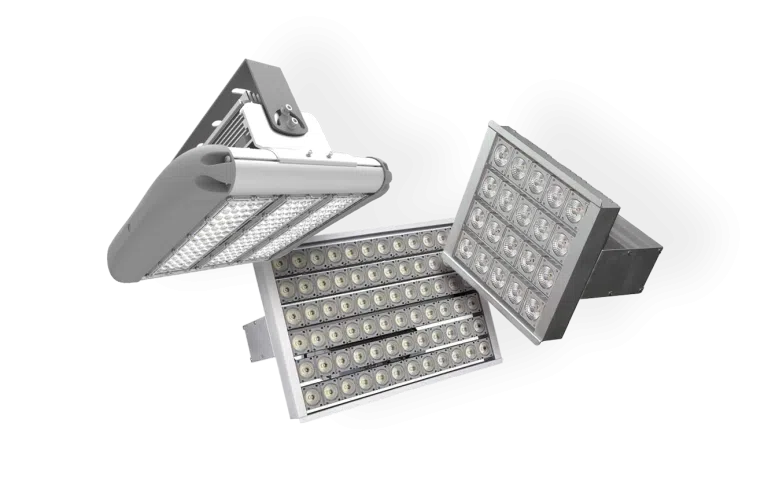
Our LED Power Generation and Nuclear Power Plant Lighting includes industrial high bays, low bays, linear fixtures, high-temperature fixtures, vapor tight lights, explosion-proof lighting, emergency lighting, and outdoor area and flood lights. Available models vary by wattage, lumen output, voltage, optics, color temperature, controls, and mounting method.
These fixtures are used in turbine halls, generator rooms, boiler rooms, steam areas, maintenance platforms, control rooms, switchgear rooms, electrical rooms, fuel handling areas, outdoor yards, security perimeters, roads, parking areas, and plant support spaces.


LED Power Plant Lighting for Turbine Halls, Boiler Rooms, Control Rooms, and Outdoor Yards
LED power plant lighting is used in turbine halls, generator rooms, boiler rooms, steam areas, maintenance platforms, control rooms, switchgear rooms, electrical rooms, hazardous-location areas, outdoor yards, security perimeters, roads, parking areas, and plant support spaces. These environments can expose fixtures to heat, vibration, moisture, steam, corrosion, electrical equipment, difficult maintenance access, and plant-specific safety requirements. Start by identifying whether each area is ordinary, high-temperature, wet or corrosive, classified, nuclear-qualified, emergency-related, or inspection-critical; that determination should guide fixture selection before wattage or lumen output.
High-temperature LED fixtures are often used in power plants, especially near boiler areas, steam systems, turbine halls, high-heat equipment, and poorly ventilated spaces. They are not required everywhere. Standard industrial LED fixtures may be suitable in general work areas, offices, control rooms, parking areas, and support spaces when the environment allows. Hazardous-location luminaires may be required in fuel handling, hydrogen, chemical, or other classified areas. Nuclear-related areas may require plant-specific qualification, documentation, procurement controls, or other approvals.
Selection and Installation Note: Product specifications, wattage, lumen output, optics, color temperature, CRI, voltage, dimming, controls, mounting method, high-temperature rating, hazardous-location rating, nuclear qualification, environmental rating, corrosion resistance, impact rating, certifications, and warranty coverage vary by model. Confirm the selected product specification before ordering. For power plants, turbine halls, boiler rooms, switchgear rooms, hazardous locations, nuclear facilities, high-temperature areas, emergency systems, or safety-related applications, verify requirements with the facility team, plant engineer, EHS team, project specifier, local inspector, nuclear procurement/specification team where applicable, and a licensed electrical professional.
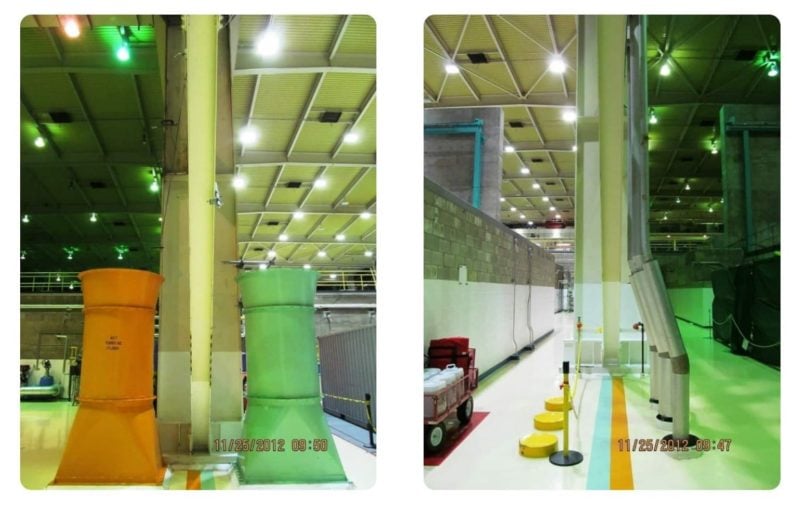
LED lighting was installed in a nuclear facility in Alabama, replacing legacy mercury vapor lighting, shown in green.
Recommended Foot-Candles for Power Plant Lighting
Power plant light levels vary by task, equipment type, ceiling height, heat exposure, maintenance activity, control-room needs, egress requirements, outdoor area, and facility standards. The ranges below are general planning values. Final fixture selection should account for environmental conditions, temperature rating, emergency operation, hazardous-location classification, nuclear qualification where required, and selected product specifications.
Power Plant Lighting by Area
Power plants usually need several fixture families in the same facility. A boiler room, turbine hall, control room, switchgear room, outdoor yard, and hazardous area should not automatically use the same fixture type.
| Power Plant Area | Lighting Priorities |
|---|---|
| General industrial areas | Use standard industrial LED high bays, low bays, linear fixtures, or area lighting when the space is not high-temperature, classified, corrosive, or subject to plant-specific nuclear qualification requirements. |
| Turbine halls and generator rooms | Review mounting height, vibration, heat, glare, maintenance platforms, inspection needs, and whether high-temperature fixtures are required near equipment. |
| Boiler, steam, and high-heat areas | Use high-temperature LED fixtures where the measured ambient temperature at fixture height exceeds standard fixture ratings. |
| Maintenance platforms and service areas | Provide appropriate task visibility for valves, gauges, ladders, platforms, motors, pumps, access points, and repair work. |
| Control rooms and monitoring stations | Use comfortable, low-glare lighting for screens, operators, documentation, monitoring panels, and extended shifts. |
| Electrical and switchgear rooms | Confirm task visibility, emergency lighting, required working clearances, arc-flash work practices, fixture placement, and glare around equipment labels and panels. |
| Hazardous-location and fuel handling areas | Use hazardous-location lighting matched to the documented Class, Division or Zone, Group, temperature code, ambient rating, and installation requirements. Explosionproof construction is one protection method and is not required for every classified location. |
| Nuclear-qualified and safety-related areas | Confirm plant-specific qualification, procurement requirements, radiation exposure, seismic requirements, EMC requirements, documentation, and environmental qualification before selecting fixtures. |
| Outdoor yards and security perimeters | Use outdoor-rated area lights, flood lights, wall packs, or parking lot lights selected for pole height, glare, cameras, weather, corrosion, and light trespass. |
How to Choose LED Power Plant Lighting
Choose power plant lighting in this order: identify the area environment and any required high-temperature, hazardous-location, nuclear qualification, or emergency requirements; define the task, mounting conditions, and required visibility; then select the fixture type, wattage, lumen output, optics, voltage, controls, and mounting method that fit the approved application.
| Selection Factor | What to Confirm |
|---|---|
| Plant area and task | Confirm whether the fixture is for general lighting, inspection, control rooms, turbine halls, boiler areas, maintenance platforms, switchgear rooms, outdoor yards, or security. |
| Ambient temperature | Measure or estimate temperature at the actual fixture mounting height, especially near boilers, steam lines, turbines, dryers, recovery areas, and enclosed ceiling pockets. |
| High-temperature fixture rating | Use high-temperature fixtures only where needed. Confirm maximum ambient rating, lumen output at temperature, driver location, IP rating, and warranty conditions. |
| Vibration and impact | Turbine halls, generator rooms, pump areas, and heavy equipment spaces may require fixtures and mounting hardware suited for vibration and mechanical exposure. |
| Moisture, steam, and corrosion | Boiler rooms, washdown areas, chemical areas, and outdoor yards may require wet-location, IP-rated, vapor tight, or corrosion-resistant construction. An IP rating addresses ingress of solids and water; confirm materials, coatings, seals, and hardware separately for corrosive or chemical exposure. |
| Hazardous-location classification | Fuel handling, hydrogen systems, chemical areas, and classified spaces require a fixture matched to the established area classification. Confirm Class, Division or Zone, Group, temperature code, ambient rating, and applicable wiring methods before ordering. |
| Nuclear qualification | For nuclear facilities, confirm plant specification, procurement category, environmental qualification, radiation exposure, seismic requirements, EMC requirements, and documentation needs. |
| Emergency operation | Confirm whether fixtures are normal, emergency, egress, generator-backed, battery-backed, inverter-fed, or part of a plant-specific emergency system. |
| Controls and monitoring | Dimming, occupancy sensors, switching zones, and control integration must be compatible with the selected fixture and plant operating procedures. |
Where High-Temperature Lighting Is Used in Power Plants
High-temperature lighting is used in power plants where the environment requires it. The important number is the ambient temperature at the fixture, not the general room temperature.
| Area | What to Review |
|---|---|
| Boiler rooms | Confirm heat, steam, vibration, mounting height, IP rating, fixture body temperature, and driver rating. |
| Steam generation areas | Review steam exposure, moisture, temperature swings, condensation, and maintenance access. |
| Turbine halls and generator rooms | Use high-temperature fixtures where heat at the mounting location exceeds standard ratings. Not every turbine hall location requires high-temperature lighting. |
| Maintenance platforms near hot equipment | Confirm task lighting, fixture protection, heat exposure, vibration, and safe access for service. |
| Ceiling pockets and poorly ventilated areas | Heat can accumulate near ceilings or above equipment. Confirm ambient temperature at the fixture location before ordering. |
Buying guidance: For high-temperature areas, confirm maximum ambient temperature rating, expected lumen output, driver location, IP rating, mounting method, controls compatibility, and warranty conditions. A fixture suitable for a general industrial aisle may have a shorter service life near steam or boiler equipment if its environmental ratings are not appropriate.
Where Hazardous-Location and Explosion-Proof Lighting Is Used in Power Plants
Some power plant areas may require hazardous-location lighting, but not every power plant space is classified. Fuel handling, hydrogen systems, chemical storage, battery rooms, solvent areas, and certain process zones should be reviewed against the facility's documented area classification before selecting fixtures.
| Area | What to Confirm |
|---|---|
| Fuel handling areas | Confirm fuel type, vapor or dust risk, classified boundaries, Class/Division or Zone requirements, Group, ambient conditions, and fixture temperature code. |
| Hydrogen systems | Hydrogen-cooled generator areas or storage systems may require specialized hazardous-location review. Confirm the established plant classification and required ratings before selecting lighting for hydrogen facilities. |
| Chemical storage and feed systems | Review chemical type, ventilation, spill risk, corrosion, vapor potential, wiring methods, and fixture listing. An IP rating alone does not establish chemical or corrosion resistance. |
| Battery rooms | Confirm ventilation, hydrogen generation potential, local requirements, corrosion exposure, emergency lighting, and fixture suitability. |
Buying guidance: Do not select hazardous-location or explosionproof fixtures by wattage alone. Confirm the documented Class, Division or Zone, Group, temperature code, ambient rating, voltage, mounting method, wiring method, and environmental exposure before ordering.
Nuclear-Qualified LED Lighting Considerations
Nuclear facilities may require lighting that meets plant-specific qualification, documentation, procurement, and environmental requirements. Terms such as nuclear-grade, radiation-tolerant, seismic-rated, and EMC-tested should only be used when the selected product documentation supports those requirements for the specific application.
Potential nuclear facility lighting areas include control rooms, turbine halls, generator rooms, containment-related spaces, refueling areas, decontamination areas, spent fuel support spaces, security areas, and emergency egress routes. Final requirements should be confirmed with the plant’s specification, procurement process, and qualified engineering team.
| Requirement | What to Confirm |
|---|---|
| Radiation exposure | Confirm whether the fixture location requires radiation tolerance and what documentation is needed. |
| Environmental qualification | Confirm whether the lighting equipment is safety-related or otherwise covered by plant-specific qualification requirements. |
| Seismic and vibration | Confirm seismic, vibration, mounting, and structural requirements for the fixture and installation. |
| EMC / EMI | Confirm whether electromagnetic compatibility testing or plant-specific controls compatibility is required. |
| Documentation and procurement | Confirm required submittals, test reports, traceability, quality documentation, and approved-equipment processes. |
When a Power Plant Lighting Plan Helps
A lighting plan can help for large turbine halls, outdoor yards, maintenance platforms, parking and road areas, equipment halls, or projects where fixture placement and uniformity are difficult to judge from wattage alone. It is especially useful when ceiling heights, equipment shadows, platforms, structural steel, and access routes affect the final light levels.
A lighting plan should be paired with a specification review. Photometrics can estimate fixture placement and light levels, but they do not confirm hazardous-location classification, high-temperature suitability, nuclear qualification, emergency system requirements, seismic requirements, or plant procurement acceptance.
Request a power plant lighting review
Common Power Plant Lighting Mistakes
- Using high-temperature fixtures everywhere: High-temperature fixtures are important near heat sources, but standard industrial fixtures may be suitable in ordinary areas.
- Using standard fixtures in high-heat zones: Boiler rooms, steam areas, and ceiling pockets can exceed standard fixture ratings at the mounting location.
- Ignoring hazardous-location classification: Fuel handling, hydrogen systems, battery rooms, and chemical areas may require specific hazardous-location ratings based on the documented area classification.
- Overusing nuclear-grade language: Nuclear, radiation-tolerant, seismic, EMC, and safety-related claims should be tied to documented product qualifications and plant requirements.
- Choosing by wattage alone: Wattage does not confirm temperature rating, hazardous-location listing, emergency operation, optics, glare, vibration suitability, or nuclear qualification.
- Skipping switchgear and control-room glare review: Screens, panels, labels, and equipment clearances may require lower-glare fixture choices.
- Not reviewing emergency operation: Egress routes, stairways, critical areas, and control spaces may require emergency lighting, generator-backed circuits, or central inverter systems.
- Forgetting maintenance access: Fixtures mounted above turbines, boilers, platforms, or outdoor equipment should be selected with safe service access in mind.
Power Plant Lighting Certifications, Rebates, and Warranty Support
Selected LED power plant lighting products from LED Lighting Supply may carry a safety certification or listing from an approved testing organization, such as UL, ETL, or CSA, depending on the product and application. Some models may be DLC or DLC Premium listed for utility rebate programs where available. DLC qualification is an efficiency and performance program, not an electrical safety certification. Rebate requirements vary by utility, region, and product listing, so confirm eligibility for the exact selected product before ordering.
Warranty terms vary by product. Review the selected product specification and warranty documentation before purchase to confirm certifications, DLC status, voltage, controls compatibility, mounting method, environmental rating, warranty coverage, and suitability for the site layout and surrounding conditions.
Request a power plant lighting review, and our Product Specialists can help review the plant area, fixture type, heat exposure, established area classification, nuclear qualification requirements, light levels, mounting height, voltage, controls, and published product specifications.
LED Power Generation Lighting FAQs
How Should I Choose Lighting For Different Power Plant Areas?
Choose power plant lighting based first on the environment and task, including whether the area is ordinary, high-temperature, wet, corrosive, classified, nuclear-qualified, inspection-critical, or emergency-related. A boiler room, turbine hall, control room, switchgear room, outdoor yard, and hazardous area should not automatically use the same fixture type.
When Are High-Temperature LED Fixtures Needed In A Power Plant?
High-temperature LED fixtures are used where the measured ambient temperature at fixture height exceeds standard fixture ratings. They are often used near boiler areas, steam systems, turbine halls, high-heat equipment, and poorly ventilated spaces, but are not required everywhere.
What Should Be Confirmed For Lighting Near Boilers Or Steam Equipment?
For boiler, steam, and high-heat areas, confirm ambient temperature at the fixture location, maximum ambient rating, driver location, lumen output at temperature, IP rating, mounting method, controls compatibility, and warranty conditions. Heat can accumulate near ceilings or above equipment, so general room temperature is not the key measurement.
How Should Hazardous-Location Lighting Be Selected For Power Plants?
Hazardous-location or explosion-proof lighting should be selected only after the required Class, Division, Zone, Group, and temperature code have been confirmed. Also confirm voltage, mounting method, conduit and fittings, and environmental rating before ordering.
Are All Power Plant Areas Classified Hazardous Locations?
No, not every power plant space is classified. Fuel handling, hydrogen systems, chemical storage, battery rooms, solvent areas, and certain process zones should be reviewed before fixtures are selected.
When Does A Power Plant Lighting Plan Help?
A lighting plan can help when fixture placement and uniformity are difficult to judge from wattage alone, including in large turbine halls, outdoor yards, maintenance platforms, parking and road areas, and equipment halls. It is especially useful when ceiling heights, equipment shadows, platforms, structural steel, and access routes affect final light levels.
Can Photometrics Confirm All Power Plant Lighting Requirements?
No, photometrics can estimate fixture placement and light levels, but they do not confirm hazardous-location classification, high-temperature suitability, nuclear qualification, emergency system requirements, seismic requirements, or plant procurement acceptance. A lighting plan should be paired with a specification review.
What Must Be Verified For Nuclear Facility Lighting?
Nuclear facility lighting may require plant-specific qualification, documentation, procurement, and environmental requirements. Confirm the plant specification, procurement category, environmental qualification, radiation exposure, seismic requirements, EMC requirements, and documentation needs for the specific application.