Replacing a 400 Watt Metal Halide with LED: Wattage, Lumens, and Real-World Savings
What Does it Take to Replace a 400-Watt Metal Halide Bulb with LED?
Converting from a 400-watt metal halide system to LED involves more than matching wattage numbers. A properly selected LED fixture can often replace a 400-watt metal halide fixture while using substantially less power, but the correct LED wattage and lumen output depend on the existing fixture, ballast draw, mounting height, optics, target light levels, and application.
A 400-watt metal halide system commonly draws more than 400 watts at the electrical supply once ballast losses are included, although actual input power varies by ballast type and condition. Metal halide lamp output and lumen maintenance also vary by lamp and fixture. Many LED replacements use approximately 120 to 200 watts, but a one-for-one wattage rule is not a lighting design method. Compare fixture photometry, delivered illuminance, distribution, glare, and energy use instead.
Whether you’re upgrading lighting in a warehouse, parking lot, gym, manufacturing facility, workshop, or tennis court, the conversion process follows the same principles. Smart facility managers rely on fixture-specific photometric plans rather than guesswork.
Important: Final fixture selection, wiring method, voltage compatibility, mounting condition, and code compliance must be verified by a licensed electrician, the authority having jurisdiction, and other qualified project professionals as applicable.
Replacing 400W Metal Halide with LED
- High Bay Lighting: High Bay LED Light Replacement
- NSF Food Processing: 400 Watt Equivalent LED NSF Fixtures
- Shop Lighting: 400 Watt Equivalent LED Shop Lights
- Flood Lighting: 400 Watt Equivalent LED Flood Lights
- Shoebox Parking: 400 Watt Equivalent LED Parking Lot Lights
- Wall Pack Lighting: 400 Watt Equivalent LED Wall Packs
- Sports Lighting: 400 Watt Equivalent LED Sport Lights
How Many LED Watts Replace a 400 Watt Metal Halide?
Purchasing LED fixtures based on wattage alone can result in inadequate lighting, excess light, glare, or unnecessary energy use. A 400-watt LED fixture may be appropriate for some high-output applications, but it is not automatically an equivalent replacement for a 400-watt metal halide fixture. LED efficacy, optical distribution, mounting height, and the target illuminance all affect the result.
Many commercial LED luminaires produce more lumens per watt than metal halide systems, but published efficacy varies by model, output setting, color characteristics, optics, driver losses, and operating conditions. Compare complete-luminaire input watts, tested lumen output, photometric distribution, and applicable ratings rather than relying on lamp or fixture wattage alone.
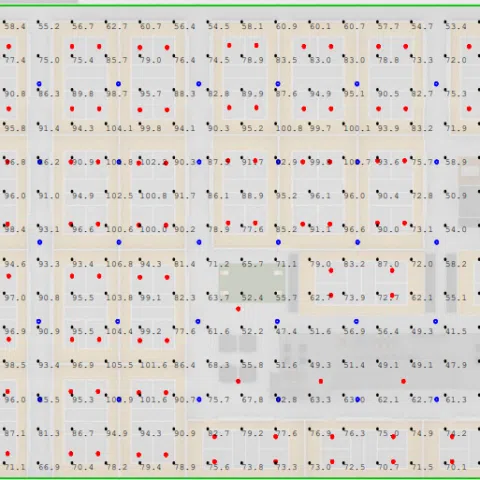
Focus on the illuminance and uniformity your space requires. A photometric plan using the actual fixture IES file can evaluate foot-candle or lux levels, spacing, mounting height, glare, and light distribution.

We helped this customer light up his sports court with LED pickleball court lights.
Understanding Lumens vs Traditional Wattage Measurements
Traditional lighting systems such as metal halide and HPS were often identified by nominal lamp wattage. LEDs can deliver different lumen packages and distributions at the same wattage, so fixture wattage alone is not enough to predict lighting performance.
Defining Lumens for LED Selection
Lumens measure the total visible-light output of a source, weighted to the sensitivity of the human eye under photopic viewing conditions. Wattage measures electrical power input. Neither fixture lumens nor wattage alone determines how much light reaches a work surface; fixture optics, mounting geometry, room surfaces, and spacing determine delivered illuminance.
LED luminaires can provide high luminaire efficacy, expressed in lumens per watt, but lumens are not electrical energy and should not be described as a percentage of electrical input. LEDs generally produce less radiant heat in the beam than metal halide lamps, although LED fixtures still generate heat that must be managed by their thermal design.
Foot Candles: Measuring Light Distribution
One foot-candle equals one lumen per square foot at a surface. Foot-candles and lux measure illuminance at the task plane or other measured surface. Recommended light levels vary with the task, worker needs, contrast, safety considerations, and applicable project criteria. For example, office and manufacturing applications may use different target illuminance levels depending on the work performed.
Professional lighting software calculates predicted illuminance distribution by analyzing fixture placement, mounting height, photometric distribution, lumen output, surface reflectances, and other project inputs. It helps evaluate average illuminance, uniformity, and potential hot spots before installation.
Professional Lighting Plans Eliminate Guesswork
A comprehensive lighting plan can transform your conversion from estimation to a fixture-specific layout. Our photometric analysis can estimate fixture quantities and locations based on supplied dimensions, mounting height, task requirements, existing mounting locations, and the selected fixture’s photometric data.
The plan can identify potential hot spots, dark areas, and spacing considerations before installation begins. Results depend on accurate project information and the final installed conditions; the project electrician, engineer, and authority having jurisdiction remain responsible for applicable design and code requirements.
Case Study: Installation of new LED Lighting for Stone Basyx in Charlotte, NC
|
After: 150 Watt High Output UFO High Bay | 24000 Lumens |
 |
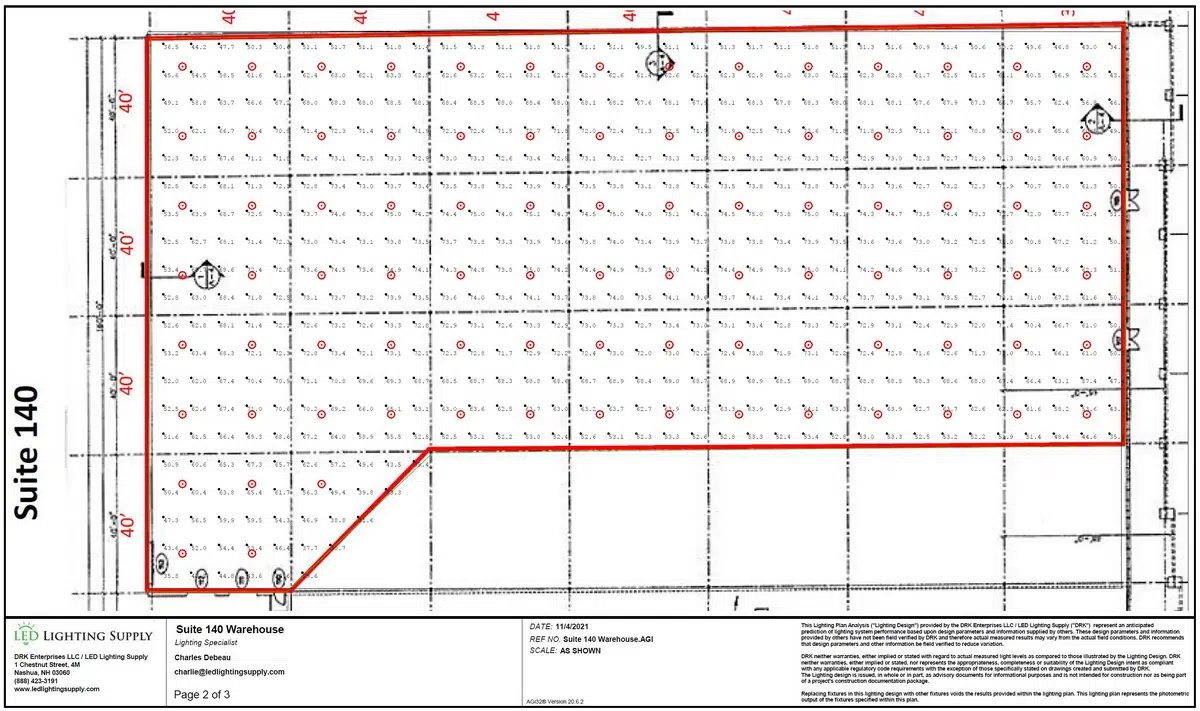
Lighting Plan We Created for the Customer
|
Lighting Plan |
Heat Map |
 |
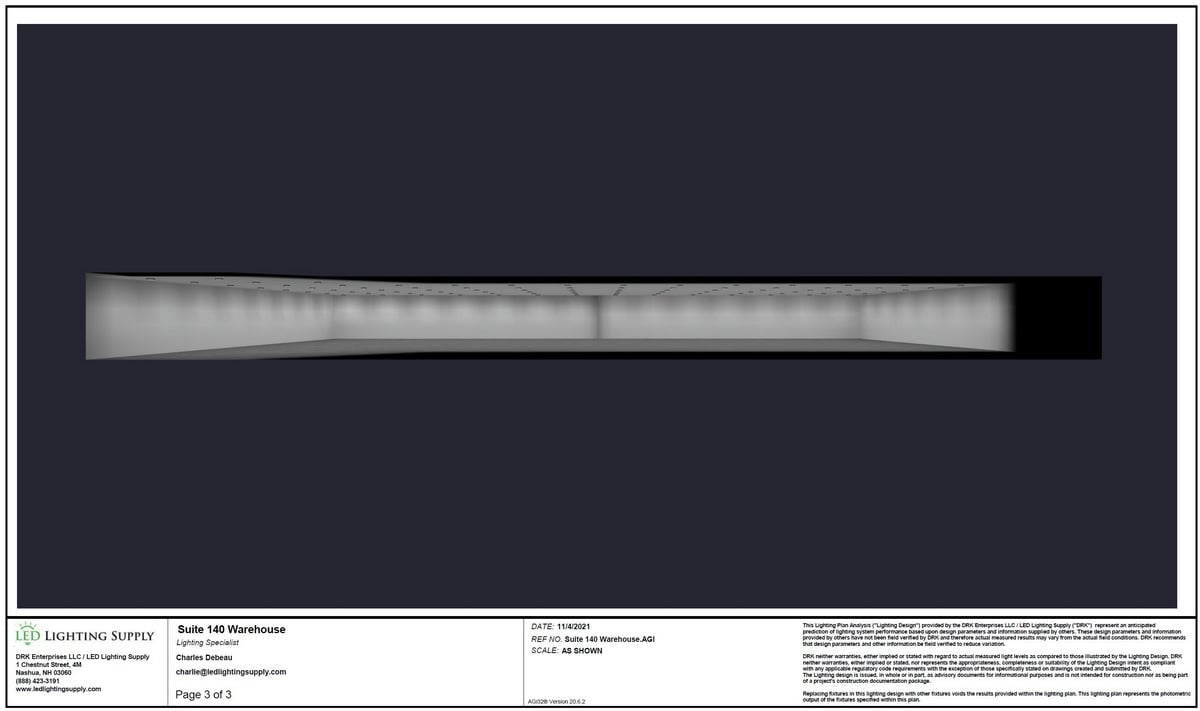 |
Warehouse / Retail Lighting Installation Plan Metrics
- Mounting height: 23 ft
- Fixture Used: MLLG-LED-HBHO-150-5-120: 80 / 100 / 120 / 150 Watt Adjustable UFO High Bay | 16000 to 30000 Lumens | 5000K | 100-277V | High Performance
- FC achieved: 65.36 FC average
- Uniformity (Avg/Min): 2.21
What are the Cost Savings and ROI When You Convert from Metal Halide to LED?
Compare estimated energy costs, 5-year savings, simple payback, and ROI for replacing metal halide fixtures with LED.
150W LED UFO High Bay vs 400W Metal Halide Replacement (with ballast)
Assumptions: Based on 16 hours/day, 220 days/year at $0.20/kWh,
50 fixture(s), and a 15% ballast factor applied to the metal halide wattage
(400W lamp + 15% ballast = ~ 460W input).
•
Energy cost and ROI calculations are based on energy savings only and assume an LED fixture cost of
$100.00 per fixture.
• Maintenance savings from reduced bulb and ballast replacements are not included
in these calculations.
In this example with 50 fixture(s), total LED fixture investment is approximately $5,000.00, and estimated annual energy-only savings are $10,912.00. Simple payback based on energy savings alone is under 6 months. Maintenance savings from eliminating metal halide bulb and ballast replacements provide additional value throughout the fixture's 50,000-hour lifespan, but are not included in this ROI calculation.
Maintenance Cost Considerations
LED conversion can reduce relamping and ballast-maintenance needs compared with metal halide systems. Actual maintenance intervals and costs depend on lamp type, ballast type, operating hours, switching cycles, ambient conditions, access equipment, labor rates, and the selected LED fixture.
LED products do not require lamp or ballast replacement in the same way as traditional metal halide fixtures, but they are not maintenance-free. Drivers, surge-protection devices, seals, optics, and other components can require inspection or replacement over the life of a system. Review the selected product’s warranty, rated life, maintenance requirements, and operating-temperature limits.
Light Quality: Why CRI Matters for LED Selection
Color Rendering Index (CRI) describes how faithfully a light source renders colors compared with a reference source of similar color temperature. CRI is separate from lumen output, illuminance, and efficacy. Higher CRI may be beneficial where color matching, inspection, labeling, or visual identification is important.
Metal halide and LED CRI values vary by lamp or fixture model. Many commercial LED fixtures are available in 70 CRI, 80 CRI, 90 CRI, and other options, depending on the product and application. Verify the published CRI and color characteristics for the exact fixture being considered.
Higher CRI does not automatically allow fewer lumens, eliminate eye strain, or increase productivity. Evaluate CRI along with illuminance, uniformity, glare control, color temperature, task requirements, and fixture placement.

Metal Halide Lumen Depreciation vs LED L70 Performance
Metal halide lamps typically lose light output over their operating life, and lamp lumen maintenance can be affected by lamp type, ballast operation, fixture condition, dirt accumulation, and operating environment. Initial lumen ratings and maintained output should be verified using the lamp and fixture manufacturer’s published data.
L70 is commonly used for LED products to describe the estimated operating time at which light output reaches 70% of its initial value under stated test and calculation conditions. L70 ratings are model-specific and do not guarantee that every fixture will operate for that period in every installation. Ambient temperature, operating hours, electrical conditions, and thermal environment can affect LED performance and life.
When comparing metal halide and LED systems, review initial and maintained light output, fixture photometry, expected operating conditions, warranty terms, and the lighting levels needed at the task plane.
LED Optical Control vs Traditional Fixture Losses
LED luminaires can use integrated optics to direct light toward the intended area. Metal halide fixtures commonly use reflectors or refractors to control the omnidirectional light produced by the lamp. The relative delivered light depends on each fixture’s optical design, condition, mounting geometry, room surfaces, and application.
It is not accurate to apply one fixed percentage of reflector loss or delivered-light advantage to every LED or metal halide fixture. A photometric comparison using the actual existing and proposed fixture distributions is the most reliable way to evaluate illuminance, uniformity, spill light, and glare.

Photopic and Scotopic Vision Considerations
Human vision changes with lighting level. Photopic vision predominates under typical daytime and well-lighted task conditions and is the basis for standard lumen measurements. Scotopic vision predominates at very low light levels and has a different spectral sensitivity.

Cone Cells and Photopic Response
Cone cells support color vision and detailed vision under brighter conditions. Standard photometric measurements, including lumens and foot-candles, are weighted to the photopic visual response. Color temperature, expressed in kelvin, describes the apparent warm or cool appearance of white light; it does not by itself establish brightness, CRI, visual comfort, or performance.
Rod Cells and Low-Light Sensitivity
Rod cells are more important in low-light and peripheral vision and do not provide color discrimination in the same way as cone cells. Spectral power distribution can affect perceived brightness under low-light conditions, but this effect depends on adaptation level, the specific light source, the task, and the viewing environment. It should not replace photometric design for normal workplace lighting.
Spectral Distribution Considerations
Metal halide and LED products have different spectral power distributions. Properly calibrated photometric meters measure visible light according to the standard photopic response; ultraviolet and infrared radiation are not counted as lumens. Select lighting based on measured or calculated illuminance, color quality, glare control, uniformity, and the requirements of the application.

Professional LED Conversion Planning Process
LED Lighting Supply helps customers compare LED products for warehouse, manufacturing, retail, and outdoor applications. We can review fixture specifications, application information, energy-use assumptions, and available photometric data.
Projects commonly begin with an inventory of current fixtures, mounting heights, electrical information, operating schedules, and lighting goals. Using customer-supplied project information and fixture photometry, we can prepare lighting plans showing predicted foot-candle distribution, uniformity, and fixture locations.
Whether you’re upgrading a small shop or a large distribution center, our lighting specialists can help identify fixtures that match established project requirements. Installation methods, electrical work, structural suitability, and final code compliance must be confirmed by qualified project professionals and the authority having jurisdiction.
Contact us for a complimentary lighting plan and an energy-use comparison based on your operating schedule and electrical rate.

Why Choose LED Lighting Supply for Your Metal Halide Conversion
Our product specialists help customers compare fixture specifications, photometric data, energy-use assumptions, and available product options for commercial LED conversions. Energy savings depend on the existing system input power, selected LED fixture wattage, operating hours, utility rate, controls, maintenance practices, and installation conditions. Our complimentary custom lighting plans use fixture-specific photometric software to help evaluate lighting layouts rather than relying on generic one-for-one replacements.