Total 5-Year Energy Savings:
$7K+Explosion Proof Lights Supplied:
21The Backstory of Our Collaboration With Blue Origin
LED Lighting Supply’s collaboration with Blue Origin started when Control Engineer Matthew Vanderploeg reached out in 2023. His team was seeking support on an explosion proof LED lighting upgrade for their rocket engine testing station in Huntsville, Alabama. Blue Origin is an aerospace company that develops and launches reusable rocket systems and space technologies. Their Alabama team was reconfiguring the historic Apollo-era Test Stand 4670 at NASA’s Marshall Space Flight Center near their production factory. The environment supported hot-fire certification and development testing of rocket engines, making it a hazardous location.
The 1000-watt metal halide system used in the old configuration produced uneven light levels. The inconsistent lighting caused operational concerns in the Class I, Division 2 (C1D2) rated environment. For an aerospace engineering operation, lighting is not a background concern. Engineers rely on recorded visual details to evaluate engine performance, and inconsistent illumination compromises the footage. Crews working around pressurized equipment need to see clearly at all times to ensure safety. The lighting upgrade had to improve overall visibility in the space while complying with hazardous location lighting requirements.
The Challenge of the Aerospace Explosion Proof Project
The following requirements shaped the project conversation right away. The light fixtures needed a C1D2 rating for the hazardous testing environment. The lighting solution needed to perform under high-speed camera recordings at 6,000 frames per second without flickering. LED fixtures can produce a flicker that the human eye does not see, but a high-speed camera captures it as brightness flashing across frames. With video footage meant to document engine behavior during the hot fire, that kind of detail contaminates the record.
The team had not yet determined how much light the cameras would require. The first order needed to function as a test run across multiple output levels rather than a final specification. The reconfiguration schedule was already underway, so Blue Origin required a lighting partner with readily available light fixtures rated for hazardous environments.
Blue Origin before with Metal Halide Lighting
Blue Origin after with LED Lighting
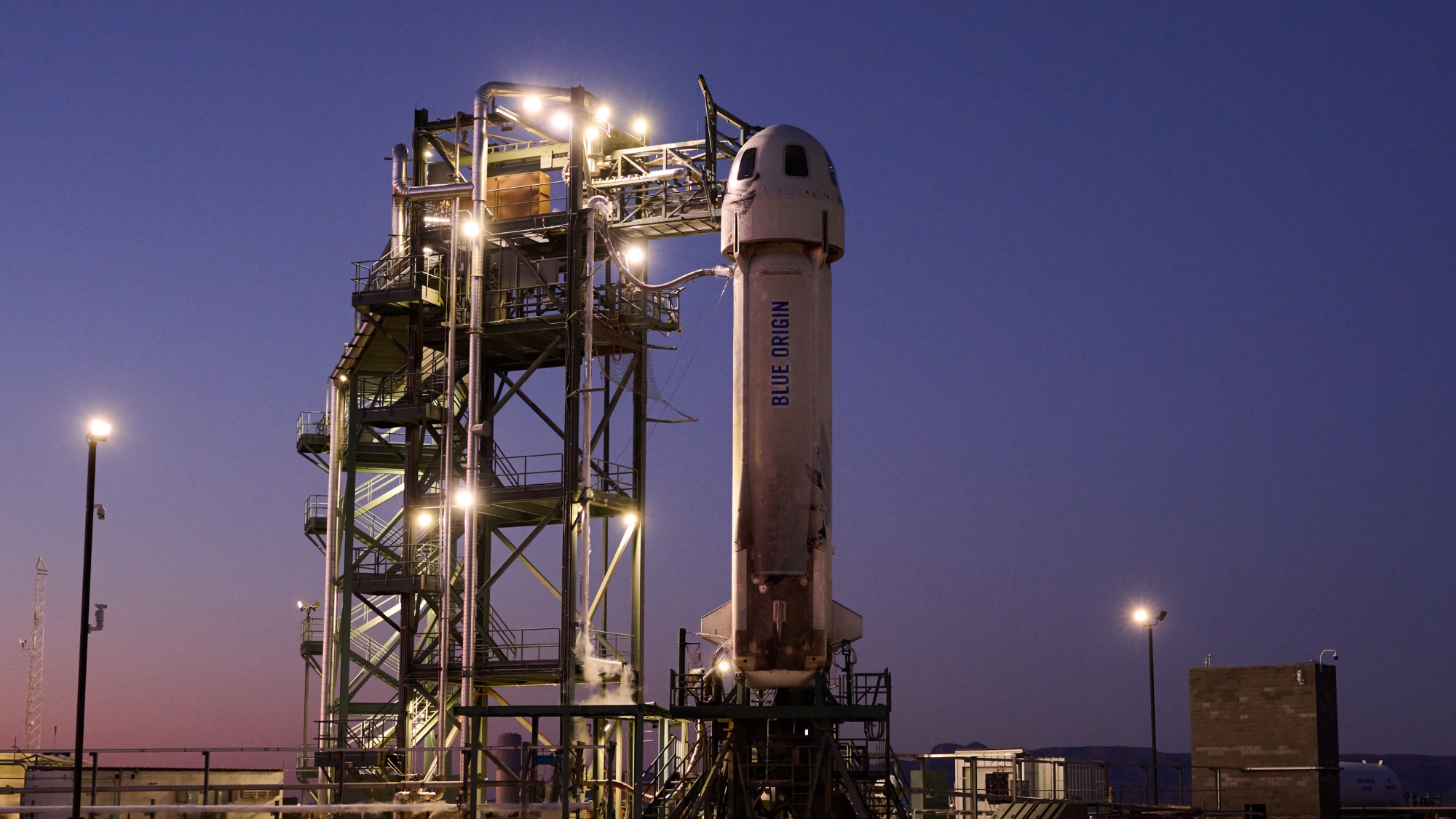
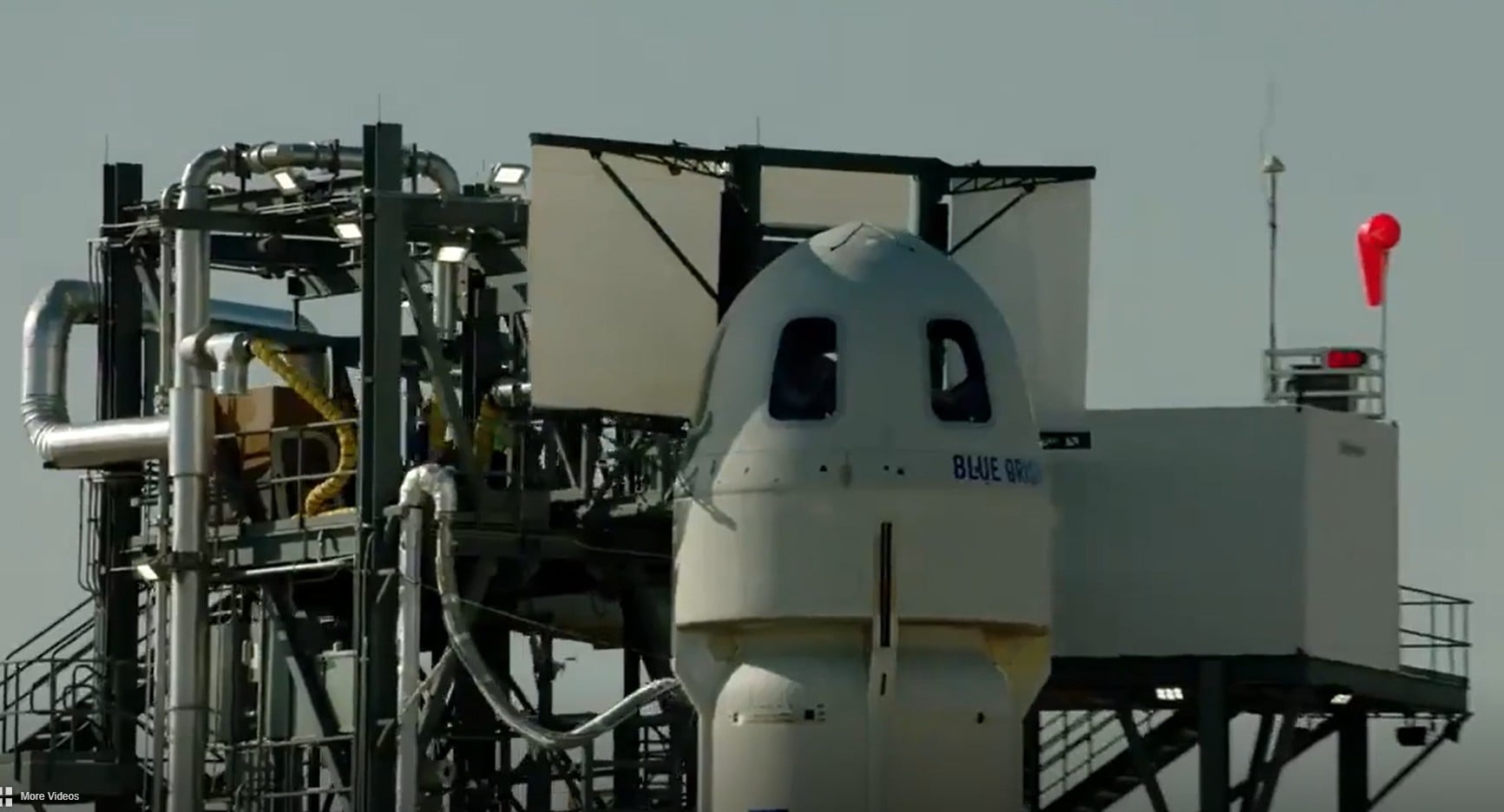
The Legacy Lighting in Place Created Several Risk Factors for Blue Origin:
- Uneven illumination in an equipment-dense space raises the odds of a misread gauge, a missed step, or a trip hazard
- A light fixture without the correct hazardous location rating becomes an ignition source in an atmosphere that may contain flammable gas under abnormal conditions
- On high-speed footage, flicker artifacts can compromise the evidence engineers rely on to evaluate engine performance
- The 1000-watt metal halide lights may shift color as they age, also compromising accurate test visibility
Detailed inspection work like this typically calls for a light level reading of 75–100+ foot-candles (fc). This range served as a guide for LED Lighting Supply when recommending the correct light fixture type, count, and placement.
The value of determining the correct specification shows up every time a test runs. Engineers get footage they can trust, captured under lighting that holds steady past the frame rate the cameras were built for. Crews get uniform lighting across a space where seeing clearly is a safety requirement, not a preference. The testing facility gets light fixtures rated correctly for a C1D2 environment, verified before purchase rather than after the fact. Test Stand 4670 is on federal property, so getting it right the first time is top priority.
* Hazardous location classification should be determined by a qualified engineer, and installation in a classified space should be performed by a licensed electrician in accordance with The National Electrical Code (NEC) and applicable local code. Our Product Specialists can help confirm your selection meets the requirements for your area classification.
LED Lighting Supply’s Custom Strategy and Solution
Blue Origin was connected with LED Lighting Supply’s Product Specialist, Tyler Greene, for consultative support on the hazardous lighting upgrade. LED Lighting Supply worked directly with the customer through the specification process. Our team evaluated the existing infrastructure to provide a lighting recommendation that was correctly rated and immediately available. The light fixtures under consideration had no dimming function, which addressed the flicker concern directly. The most common cause of flickering is the dimming feature many LED lights include. LED Lighting Supply made sure the light fixture recommendations didn’t include any dimming options.
For the sample order, LED Lighting Supply proposed three wattage output levels. Rather than capping it at one option, Blue Origin had several light fixtures to test. The product recommendation included 6 square explosion proof LED lights:
- MLLG-E-LED-EXPLA-100-50-C1D2 (100 watts)
- MLLG-E-LED-EXPLA-300-50-C1D2 (300 watts)
- MLLG-E-LED-EXPLA-400-50-C1D2 (400 watts)
All three light fixtures carry a Class I, Division 2 rating and a 5000K color temperature, delivering the neutral white light required for high-speed cameras to render most cleanly.
The logic behind the three-wattage approach was straightforward. Instead of guessing and hoping the camera footage came out usable, the team could install all three, run the cameras, and measure what the space required. That approach paid off later in the year, when Blue Origin ordered additional 400-watt lights. The sample order confirmed what they needed.
The Results of the Engine Testing Lighting Upgrade
The Blue Origin team installed the light fixtures and ran their engine testing. The engineers reported that the lights are flicker-free up to 6,400 frames per second. This means the high-speed footage performs beyond the requirement, with margin left over. Engineers reviewing hot fire footage no longer have to separate genuine engine behavior from an artifact introduced by the lighting. This also gave LED Lighting Supply something we did not have before the project started. We now have field-verified performance data at high frame rates, gathered under real conditions. This informs how we advise future customers lighting a high-speed camera environment.
Crews working around pressurized systems and propellants can now read equipment and move through the space without adjusting to uneven coverage. The practical difference shows up in small ways that add up over a shift. Less squinting at gauges in a dim corner. Fewer places where a dropped tool or a trip hazard goes unseen. Consistent color rendering that makes a discolored fitting or a fluid leak visible.
Estimated Savings From Choosing Our LED Lighting Solution
| Savings | Within 1 Year | Within 5 Years |
| Total Energy Savings | $1,314 | $6,570 |
| Maintenance Savings | $120 | $600 |
| Total Savings (Energy + Maintenance) | $1,434 | $7,170 |
* Savings and payback estimates are based on the local utility rate of $0.05 per kWh for commercial and industrial buildings in Huntsville, Alabama. The values are calculated by our LED savings calculator. *
Additional Project Spotlight at Launch Site One in Van Horn, Texas
Another Blue Origin engineer ordered four 400-watt explosion proof lights through the LED Lighting Supply website that same month for a West Texas launch site. LED Lighting Supply followed up and found a second company site working on the same problem as Alabama. That order led to formal supplier onboarding through Blue Origin’s procurement system a few months later. Three orders across nearly three years followed, all for the same Class I, Division 2 specification.
Blue Origin Light Fixture Details
| Year | Light Fixture Type | Quantity | Project / Notes |
| 2023 | 100 Watt, 300 Watt, and 400 Watt Square Explosion Proof Lights (MLLG-E-LED-EXPLA-100-50-C1D2 ×2, MLLG-E-LED-EXPLA-300-50-C1D2 ×2, MLLG-E-LED-EXPLA-400-50-C1D2 ×2) | 6 | Sample order for Test Stand 4670 in Huntsville, Alabama. Three wattage levels supplied so the team could measure the output the high-speed cameras required for hot fire certification and development testing of the BE-4 and BE-3U rocket engines. |
| 2023 | 400 Watt Square Explosion Proof Light (MLLG-E-LED-EXPLA-400-50-C1D2) | 4 | Purchase for Blue Origin’s West Texas Launch Site (Launch Site One) in Van Horn, Texas. |
| 2023 | 400 Watt Square Explosion Proof Light (MLLG-E-LED-EXPLA-400-50-60-C1D2) | 2 | Follow-up order for Test Stand 4670 after testing confirmed flicker-free performance at high frame rates. |
| 2024 | 400 Watt Square Explosion Proof Light (MLLG-E-LED-EXPLA-400-50-60-C1D2) | 4 | Follow-up order for Launch Site One after Blue Origin onboarded LED Lighting Supply as an approved vendor through its purchasing portal. |
| 2026 | 400 Watt Square Explosion Proof Light (MLLG-E-LED-EXPLA-400-50-C1D2) | 5 | Additional expansion order supporting ongoing operations at Launch Site One. |