Utility Poles
- Wood, steel, and composite fiberglass options available
- Selection support for height, class, and material
- Delivery coordination to commercial and project sites


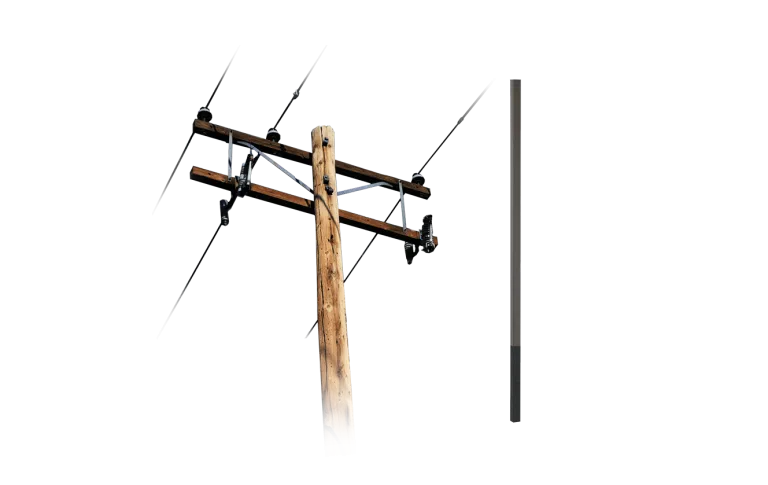

Our Utility Poles include wood, steel, and composite fiberglass poles for electrical, communication, lighting, and equipment-mounting applications. Available products vary by material, total length, pole class or manufacturer structural rating, treatment, finish, and installation configuration, including direct-burial models.
These poles are used for power distribution, telecommunications, joint-use systems, private electrical service, roadway lighting, farms, commercial properties, industrial sites, campuses, and other private-site and infrastructure projects.
-
 Starting At $650.95
-
Starting At $600.00
-
Starting At $560.27
-
Starting At $527.27
-
Starting At $509.93
-
Starting At $472.73
-
Starting At $1,127.27
-
Starting At $1,393.47
-
Starting At $990.91
-
Starting At $1,239.22
-
Starting At $890.91
-
Starting At $1,091.02
-
Starting At $772.73
-
Starting At $912.44
-
Starting At $654.55




Utility poles support approved electrical conductors, communication lines, transformers, service equipment, lighting fixtures, cameras, and other attachments above ground. They may be used for power distribution, telecommunications, joint-use systems, private electrical service, roadway lighting, farms, commercial properties, industrial sites, and other private-site or infrastructure applications.
Available materials may include wood utility poles, steel poles, and composite fiberglass poles. The correct option depends on the intended use, required height, pole class or structural capacity, mounted equipment, wind and ice exposure, installation method, soil conditions, environmental exposure, utility requirements, and manufacturer data.
Selection Note: Start by confirming the intended use, mounted equipment, and governing utility or project requirements. Then verify total pole length, required above-grade height, pole class or structural capacity, attachment loads, wind and ice exposure, embedment, soil conditions, environmental exposure, and manufacturer data before ordering. Utility poles should not be selected by height or material alone.
How to Select Utility Poles
| Selection Factor | What to Confirm |
|---|---|
| Intended use | Identify whether the pole will support electrical distribution, communication lines, lighting, transformers, service equipment, cameras, or other approved attachments. |
| Project owner and requirements | Determine whether the installation is governed by a utility, municipality, transportation agency, cooperative, campus, commercial property owner, or another authority. |
| Total pole length | Confirm the full pole length and distinguish it from the resulting above-grade height after embedment. |
| Pole class or capacity | Confirm the required pole class, ground-line capacity, manufacturer structural data, or other applicable loading designation. |
| Mounted equipment | Include conductors, transformers, crossarms, brackets, luminaires, communication cables, cameras, service equipment, and other approved attachments in the loading review. |
| Wind and ice exposure | Provide the installation address and applicable project criteria so the pole and attachments can be evaluated for local environmental loading. |
| Soil and embedment | Review soil conditions, groundwater, drainage, frost, embedment depth, backfill, compaction, and ground-line exposure. |
| Material and treatment | Confirm the pole material, wood species when applicable, preservative treatment, coating, finish, ultraviolet exposure, corrosion resistance, and hardware compatibility. |
| Field modifications | Verify approved drilling, boring, cutting, attachment, sealing, and repair procedures with the pole manufacturer before making changes in the field. |
| Delivery and installation | Plan for freight access, unloading equipment, staging space, excavation, lifting, traffic control, and installation access. |
Utility Pole Material Options
| Pole Material | General Selection Considerations |
|---|---|
| Wood Utility Poles | Wood poles are commonly direct buried and may support electrical, communication, lighting, agricultural, and private-site applications. Confirm the species, pole class, treatment, total length, embedment, framing, drilling, attachment loads, ground-line conditions, and project requirements. |
| Steel Utility Poles | Steel offers consistent manufactured dimensions and compatibility with many brackets, crossarms, base plates, and equipment-mounting systems. Review the exact pole construction, finish, corrosion exposure, structural capacity, installation method, attachment details, and grounding requirements. |
| Composite Fiberglass Utility Poles | Composite fiberglass pole bodies do not rust and may suit locations exposed to persistent moisture, salt, or selected contaminants. Confirm pole deflection, ultraviolet exposure, approved drilling and attachment methods, fire-performance data when required, hardware compatibility, embedment, and published structural capacity. Review hardware, fasteners, and attachments separately for corrosion resistance. |
No pole material is automatically best for every project. Compare exact products using the required height, loading, environmental exposure, installation method, attachment details, inspection and maintenance requirements, availability, and total installed cost.
Wood Utility Pole Species
Wood species affect pole strength, treatment, availability, drilling characteristics, and manufacturer classifications. The species offered for a project may vary by pole length, class, treatment, region, and supplier.
Southern Yellow Pine Utility Poles
Southern yellow pine is widely used for pressure-treated poles because its cellular structure accepts preservative treatment effectively. It is also valued for its strength, stiffness, and fastener-holding characteristics.
Southern yellow pine includes several related species, including loblolly, shortleaf, longleaf, and slash pine. Confirm the exact species group, treatment, pole class, dimensions, and manufacturer documentation for the selected product.
Ponderosa Pine Utility Poles
Ponderosa pine is commonly sourced from western North America and may be used for utility, communication, lighting, agricultural, and private-site applications. Its relatively straight grain and availability in longer lengths can make it suitable for selected projects.
Confirm treatment, pole class, required strength, available lengths, attachment methods, and regional product availability before specifying ponderosa pine.
Western Red Cedar Utility Poles
Western red cedar is known for natural resistance to decay and may be available for selected utility-pole applications. Suitability still depends on the exact pole class, treatment or treatment exemption, required loading, length, availability, and project specifications.
Western red cedar should not be selected solely for its natural durability. Compare the exact product with treated pine and other materials using structural data, environmental exposure, procurement cost, and installation requirements.
Wood Pole Treatment and Manufacturing
Wood utility-pole production generally begins with the selection of trees that meet requirements for length, straightness, taper, grain, knots, splits, decay, and other characteristics. The manufacturer then processes, dries or conditions, grades, frames, and treats the pole according to the applicable product specification.
Preservative treatment helps protect wood from decay, fungi, and insects. The treatment system may vary by species, manufacturer, application, specification, and jurisdiction. Confirm the exact preservative, retention level, penetration requirements, handling instructions, and applicable restrictions for the selected pole.
Poles may be factory bored or framed for specific attachments. Field drilling, cutting, or damage to the treated surface may require an approved field-treatment or sealing procedure. Follow the pole manufacturer’s instructions before modifying a treated pole.
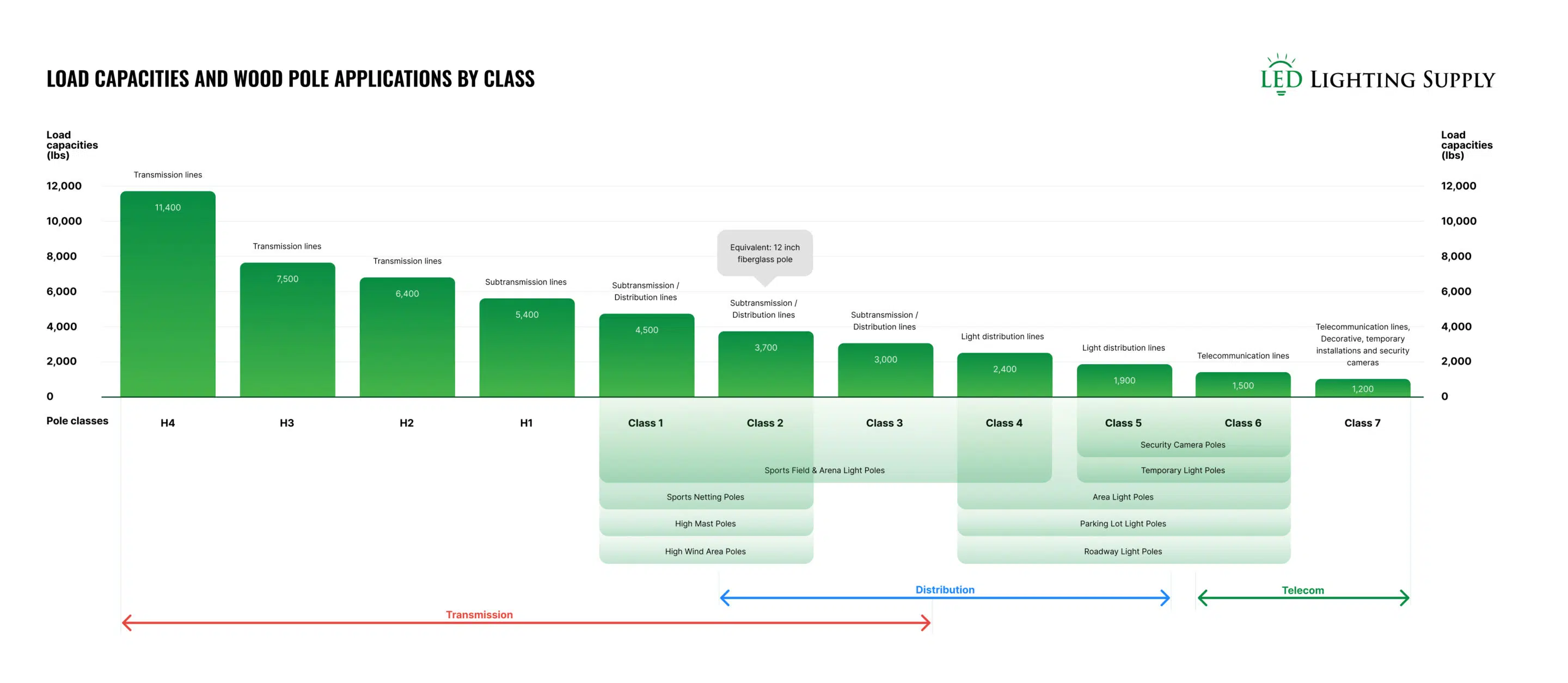
Load-Capacity Note: Pole-class or load-capacity charts are useful for preliminary comparison, but they do not establish suitability for a complete installation. Confirm conductor loads, equipment, attachments, wind, ice, embedment, and governing utility or project requirements.
Distribution, Communication, and Other Applications
Utility poles may support several different types of infrastructure. The required pole height, class, material, framing, and installation details depend on the equipment being carried and the governing project requirements.
- Electrical distribution: May include conductors, transformers, switches, service equipment, and other utility-approved components.
- Communication systems: May support telephone, broadband, fiber, cable television, and related attachments.
- Joint-use poles: Carry attachments from more than one service provider and require coordination between the pole owner and attaching organizations.
- Private electrical service: May serve farms, commercial sites, industrial properties, campuses, and remote buildings.
- Lighting applications: May support roadway lights, area lights, floodlights, security lighting, or other manufacturer-approved fixtures and brackets.
Utility distribution and transmission structures have different design requirements. A taller pole is not automatically suitable for transmission use, and height alone does not establish its application or structural capacity.
Utility Pole Height and Above-Grade Installation
Utility poles are commonly identified by their total length, but part of a direct-burial pole remains below grade. A 40-foot light or utility pole will not provide 40 feet of above-grade height after installation.
The required total length depends on:
- Required above-grade height
- Embedment depth
- Terrain and finished grade
- Conductor and communication clearances
- Equipment and attachment locations
- Road, driveway, and property crossings
- Utility or governing-authority requirements
Do not use a universal embedment formula without reviewing the exact pole, soil, loading, project requirements, and manufacturer guidance.
Pole Class, Loading, and Attachments
Wood utility poles are commonly classified by pole class, which relates to dimensions and load capacity. Steel and composite poles may use manufacturer-specific structural ratings instead. The exact rating system should be confirmed before comparing materials.
The loading review may need to include:
- Conductors and communication cables
- Crossarms, insulators, brackets, and hardware
- Transformers, switches, cabinets, and service equipment
- Lighting fixtures and mast arms
- Cameras, antennas, and other approved attachments
- Wind, ice, tension, and unbalanced loads
- Attachment height and offset from the pole
- Future equipment permitted by the pole owner
Do not add equipment to a new or existing pole unless the pole owner, manufacturer, utility, and appropriate project professionals permit the attachment and confirm the resulting loading.
Direct Burial, Soil, and Drainage
Many utility poles are installed by direct burial. The pole is placed in an excavated hole and supported using the specified embedment, backfill, compaction, and drainage procedures.
Installation planning should account for:
- Soil type and lateral resistance
- Groundwater, drainage, and standing water
- Frost depth and seasonal movement
- Required embedment
- Backfill material and compaction
- Ground-line corrosion, decay, or moisture exposure
- Underground utilities and excavation clearances
- Slope, erosion, and finished grade
- Lifting equipment and installation access
Direct burial avoids an anchor-base installation, but it does not eliminate the need for site preparation, excavation, backfill, compaction, drainage, and project-specific installation requirements.
Field Drilling and Mounting Hardware
Utility poles may require holes, through-bolts, crossarms, brackets, hooks, tenons, or other mounting hardware. Attachment methods must be compatible with the pole material and approved by the manufacturer or pole owner.
Before drilling or attaching equipment, confirm:
- Permitted hole locations and sizes
- Required edge distances and spacing
- Fastener type and material compatibility
- Sealing or treatment of field-drilled holes
- Restrictions on cutting, welding, or modifying the pole
- Required reinforcement or factory-installed inserts
- Grounding and bonding requirements
Improper field modifications can damage protective treatments, coatings, fibers, or structural sections and may affect product performance or warranty coverage.
Existing Utility Pole Assessment
Existing poles should be evaluated before new conductors, communication lines, lighting fixtures, transformers, cameras, or other attachments are added. A pole that supported the previous equipment may not have sufficient capacity for a different loading arrangement.
An existing-pole review may include:
- Pole material, species, class, model, age, and original use
- Ground-line condition and embedment
- Decay, corrosion, cracking, splitting, fiber damage, or coating failure
- Leaning, movement, impact damage, erosion, or soil settlement
- Crossarms, brackets, fasteners, and existing attachments
- Current and proposed equipment loads
- Wind, ice, tension, and unbalanced loading
- Electrical clearances, grounding, and bonding
- Ownership and permission for additional attachments
Evaluation methods and acceptance criteria depend on the pole material, pole owner, manufacturer, utility, and applicable project requirements.
Utility Pole Delivery and Site Access
Utility poles are long, heavy products that require advance planning for freight, unloading, storage, and installation. LED Lighting Supply can coordinate direct delivery to many commercial, industrial, municipal, agricultural, and infrastructure project sites.
Before delivery, confirm:
- Complete delivery address and site contact
- Road and gate access for the delivery vehicle
- Available turning and staging space
- Unloading equipment and qualified operators
- Ground conditions at the unloading area
- Safe storage and blocking before installation
- Required delivery appointments or site restrictions
Freight requirements vary by pole length, material, quantity, destination, and unloading conditions. Confirm delivery details when requesting a quote.
Are Utility Poles and Telephone Poles the Same?
“Telephone pole” is an informal term often used for a wood pole carrying telephone, cable, fiber, electrical, or joint-use attachments. The physical pole may look similar across applications, but the required pole class, height, framing, treatment, clearances, and loading depend on the equipment being supported.
Use the actual application and project requirements rather than the informal product name when selecting a pole.
What Affects Utility Pole Cost?
Utility pole cost depends on more than material and length. The complete project may be affected by:
- Pole material, species, class, model, and treatment
- Total length and required above-grade height
- Quantity and availability
- Factory framing, boring, or installed hardware
- Coatings, finishes, or special environmental requirements
- Freight distance and unloading requirements
- Excavation, lifting equipment, backfill, and compaction
- Soil, drainage, frost, slope, and site access
- Crossarms, brackets, conductors, fixtures, and other equipment
- Inspection and future maintenance requirements
Wood may offer a lower initial pole cost for some projects, while steel or composite products may be advantageous in other applications. Compare the complete installed system rather than material price alone.
Environmental Exposure, Inspection, and Maintenance
Utility poles may be exposed to wind, ice, moisture, standing water, soil chemicals, salt, ultraviolet radiation, fire, insects, vegetation, vehicle impacts, and equipment changes. The pole material, treatment, finish, embedment, hardware, and inspection plan should reflect the actual environment.
Inspect poles according to the pole owner’s, utility’s, and manufacturer’s requirements. Inspection may include:
- Ground-line condition and surrounding soil
- Decay, corrosion, cracking, splitting, fiber damage, or coating failure
- Leaning, movement, impact damage, erosion, or washout
- Crossarms, brackets, fasteners, and mounted equipment
- Field-drilled holes and repaired surfaces
- Electrical grounding and bonding
- Vegetation and access around the pole
- Changes in equipment or attachment loading
Utility poles and their attachments require inspection and may require maintenance based on the material, treatment, environment, equipment, and governing requirements.
Before Ordering Utility Poles
- Provide a complete quote request: Include the required material, total length, class or structural rating, treatment or finish, quantity, delivery location, and requested factory framing, boring, or accessory details.
- Confirm the quoted configuration: Crossarms, brackets, insulators, fasteners, predrilled holes, framing, and attachment hardware may be separate items or available only on selected products. Verify what is included before placing an order.
- Confirm factory modifications before production: Factory boring, framing, coatings, labels, lifting provisions, and other custom work may affect lead time, freight handling, return eligibility, and field installation procedures.
- Check availability early: Available species, classes, lengths, treatments, finishes, and factory modifications can vary by region, manufacturer, and production schedule.
- Coordinate substitutions before purchasing: A change from wood to steel or composite can affect attachment methods, hardware, grounding, corrosion protection, installation equipment, and approved loading. Review the complete system before approving a substitution.
- Plan delivery and unloading: Confirm the delivery vehicle, site access, unloading responsibility, lifting equipment, staging area, and appointment requirements before shipment.
- Obtain required owner or utility approvals: Joint-use attachments, utility connections, and modifications to owned infrastructure may require prior approval, drawings, or specified hardware.
- Retain product documentation: Keep manufacturer specifications, treatment information, structural data, installation instructions, and approved attachment details for installation, inspection, and future maintenance.
Need Help Selecting Utility Poles?
LED Lighting Supply can help narrow available wood, steel, and composite fiberglass pole options using the project information provided. Useful details include the intended use, delivery location, total length, required above-grade height, pole class or structural capacity, mounted equipment, environmental loading, material preference, treatment requirements, embedment conditions, quantity, and delivery access.
Contact us about utility poles and include drawings, utility requirements, equipment details, loading information, site photographs, or existing-pole information when available.
LED Lighting Supply can assist with product selection and delivery coordination. Final pole capacity, conductor loading, electrical clearances, attachment approval, embedment, installation, grounding, and code requirements should be confirmed by the pole owner, utility, manufacturer, governing authority, and appropriate qualified project professionals.
Utility Poles FAQs
How Should I Select A Utility Pole For My Project?
Select a utility pole using the intended use, total length, required above-grade height, pole class or structural capacity, mounted equipment, environmental exposure, installation method, soil conditions, and governing project requirements. Height or material alone does not establish whether a pole is suitable.
How Do Total Pole Length And Above-Grade Height Differ?
Total pole length includes the portion of a direct-burial pole that remains below grade, so it is not the same as installed above-grade height. Confirm required above-grade height, embedment depth, terrain, finished grade, attachment locations, crossings, and governing requirements when determining total length.
How Should I Compare Wood, Steel, And Composite Fiberglass Utility Poles?
Compare wood, steel, and composite fiberglass utility poles using the exact product's required height, loading, environmental exposure, installation method, attachment details, inspection and maintenance requirements, availability, and total installed cost. Wood poles are commonly direct buried, steel offers consistent manufactured dimensions and compatibility with many mounting systems, and composite fiberglass does not rust and may suit locations with persistent moisture, salt, or selected contaminants.
What Equipment Must Be Included In A Utility Pole Loading Review?
A utility pole loading review may need to include conductors, communication cables, crossarms, brackets, transformers, switches, service equipment, lighting fixtures, cameras, antennas, and other approved attachments. Wind, ice, tension, unbalanced loads, attachment height, attachment offset, and permitted future equipment may also need to be considered.
Can I Add New Equipment To An Existing Utility Pole?
New equipment should not be added to an existing utility pole until the pole has been evaluated for the different loading arrangement and the pole owner, manufacturer, utility, and appropriate project professionals permit the attachment. The review may include pole condition, ground-line condition, embedment, existing attachments, current and proposed loads, and ownership permission.
What Should Be Confirmed Before Drilling Or Modifying A Utility Pole?
Before drilling or modifying a utility pole, confirm approved procedures with the pole manufacturer and verify permitted hole locations and sizes, edge distances, spacing, fastener compatibility, sealing or treatment requirements, and restrictions on cutting, welding, or other modifications. Improper field modifications can damage protective treatments, coatings, fibers, or structural sections and may affect product performance or warranty coverage.
What Site Conditions Matter For Direct-Burial Utility Poles?
Direct-burial utility pole planning should account for soil type, lateral resistance, groundwater, drainage, standing water, frost depth, embedment, backfill, compaction, ground-line exposure, underground utilities, slope, erosion, finished grade, and installation access. Direct burial avoids an anchor-base installation but does not eliminate site preparation and project-specific installation requirements.
What Delivery Details Should I Confirm Before Ordering Utility Poles?
Before ordering utility poles, confirm the complete delivery address, site contact, road and gate access, turning and staging space, unloading equipment, qualified operators, unloading-area ground conditions, storage arrangements, and any delivery appointments or site restrictions. Freight requirements vary by pole length, material, quantity, destination, and unloading conditions.