LED Canopy Lights for Replacing Metal Halide & HPS Fixtures
Looking to convert your existing metal halide or high-pressure sodium lighting to LED? Are you unsure of whether the time or investment is worth it? We put together this comprehensive guide on some essential items to make your conversion to an LED canopy fixture easier.
What is Canopy Lighting?
LED canopy fixtures are ceiling-mounted, energy-efficient commercial lighting solutions that deliver bright illumination in low-ceiling environments. Most installations require direct ceiling mounting due to space constraints. These fixtures feature wide beam angles ranging from 120° to 140° to create uniform light distributions across large areas despite limited mounting height.
Commercial and industrial facilities benefit significantly from upgrading to these advanced lighting systems. We typically see 60-75% energy savings compared to traditional metal halide or high-pressure sodium fixtures, along with dramatically improved light quality and maintenance reduction.
The U.S. Department of Energy’s comprehensive LED lighting guidance confirms that LED fixtures can reduce energy consumption by up to 75% compared to metal halide and high-pressure sodium technologies. Their LED lighting recommendations detail the superior efficiency and longevity benefits that make LED conversion financially attractive for commercial facilities.
Starting the Process – Converting Your Canopy Lighting to LED
Converting to LED canopy lights makes financial sense for most commercial applications, though specific benefits vary by facility and usage patterns.
Start with a Lighting Plan
Our complimentary lighting design service helps commercial and industrial customers optimize their conversion. Using specialized photometric software, we model your existing fixture locations and can recommend improved positioning for better coverage. Professional lighting plans reveal foot-candle measurements and uniformity ratios across your entire space. Adequate brightness matters, but achieving consistent, evenly distributed illumination prevents dark spots and safety concerns.
The Illuminating Engineering Society provides industry-standard guidance for canopy lighting applications through its recommended practices. Their lighting standards and recommended practices establish minimum illumination levels and uniformity ratios that ensure safe, functional lighting for commercial canopy environments.
What We Need to Recommend the Right LED Canopy Fixture
To recommend the correct canopy fixture (and to confirm performance before you buy), we typically review the items below. If you don’t know everything, send what you have-photos help.
- Application: gas station canopy, parking garage, covered walkway, loading area, etc.
- Ceiling height / mounting height: approximate height from finished floor to fixture
- Site layout: basic dimensions or a sketch/site plan (even a phone photo of a drawing works)
- Existing fixture details: lamp type (MH/HPS/fluorescent), wattage, quantity, and any labels
- Voltage: 120V / 277V / 480V (or send a panel photo for verification)
- Operating hours: hours/day and days/week (used for payback and rebate estimates)
- Controls: photocell, motion sensor, dimming, timers, or none
- Environment: wet location, washdown, corrosion risk, coastal/salt, temperature extremes
- Goals: improve uniformity, reduce glare, increase brightness, reduce fixtures, and lower energy
Tip: For larger canopy areas (or when uniformity matters), we recommend a photometric lighting plan to confirm foot-candles and coverage before ordering.
Taking Inventory – What are Your Needs?
A thorough assessment of your current canopy lighting system ensures proper LED fixture selection and accurate savings projections. Key evaluation points include:
- Identify existing fixture types – send photos if uncertain about your current installation
- Note current lamp technology: Metal Halide, High-Pressure Sodium, Halogen, or Fluorescent
- Record existing wattages: 100W, 250W, 400W configurations are most common
- Check electrical supply: 120V, 277V, or 480V input voltage
- Calculate current electricity costs per kWh for an accurate payback analysis
- Research available utility rebates that can offset conversion expenses
- Document daily operating hours to determine energy savings potential
- Consider adding controls like photocells or motion sensors unavailable with legacy lighting
- Evaluate current lighting performance issues that LED conversion can resolve

Choose the Right Type of Canopy Fixture
Several canopy fixture configurations address different installation requirements and aesthetic preferences.
Surface-Mount Canopy Lighting
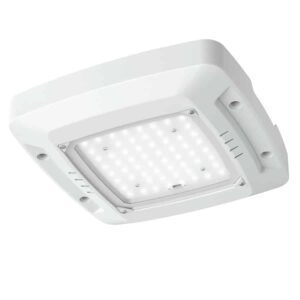
Surface mounted LED canopy lights come in square or round profiles and are installed directly onto the ceiling surface. LED versions maintain a significantly lower profile than the bulky metal halide or high-pressure sodium fixtures they replace. Many surface-mount canopies are designed around a low-profile form factor (often around 3 inches deep, model-dependent), which helps in spaces with limited clearance.
Recessed Mount Canopy Lights
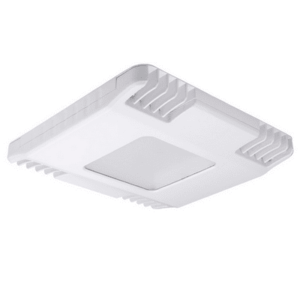
Recessed LED canopy fixtures are installed within ceiling cavities for flush mounting. Gas station canopies commonly use this installation method for a clean appearance and protection from the weather. These fixtures require adequate ceiling depth for proper installation.
Low Bay Style Canopy Lights
Contemporary LED low bay lights designs combine high-performance optics with architectural aesthetics. Several models feature color-changeable technology, allowing you to test different color temperatures before settling on your preferred option. We recommend this approach for facilities wanting flexibility in their lighting appearance.

What Wattage Do You Need?
Wattage indicates power consumption, not brightness output. LED efficiency varies dramatically between manufacturers, affecting how effectively fixtures convert electricity into visible light. Higher-quality LEDs produce more lumens per watt, reducing operating costs while maintaining superior illumination. Rather than selecting fixtures based solely on wattage, focus on lumen output requirements for your application:
- Calculate fixture efficiency by dividing total lumens by watts consumed – manufacturers often list this as efficacy ratings
- Fixtures producing less than 130 lumens per watt likely use outdated LED chip technology
- Target efficiency ratings above 130 lumens per watt for optimal performance and energy savings
Common Canopy Replacements (Guideline Ranges)
Below are typical starting ranges for canopy upgrades. Final selection depends on mounting height, spacing, reflectance, and target light levels. Use a lighting plan to verify.
| Existing Fixture | Typical LED Watt Range | Typical LED Lumen Range | Notes |
|---|---|---|---|
| 100W MH / HPS | 30-60W | 4,000-9,000 lm | Often used in small canopies and covered entries |
| 250W MH / HPS | 70-120W | 10,000-18,000 lm | Common for gas stations and parking structures |
| 400W MH / HPS | 120-200W | 18,000-30,000 lm | Higher output needs: verify glare and uniformity |
Important: HID systems often draw additional power due to ballast losses, so “input watts” can be higher than the lamp rating.
What’s the Best Color Temperature for Canopy Applications?
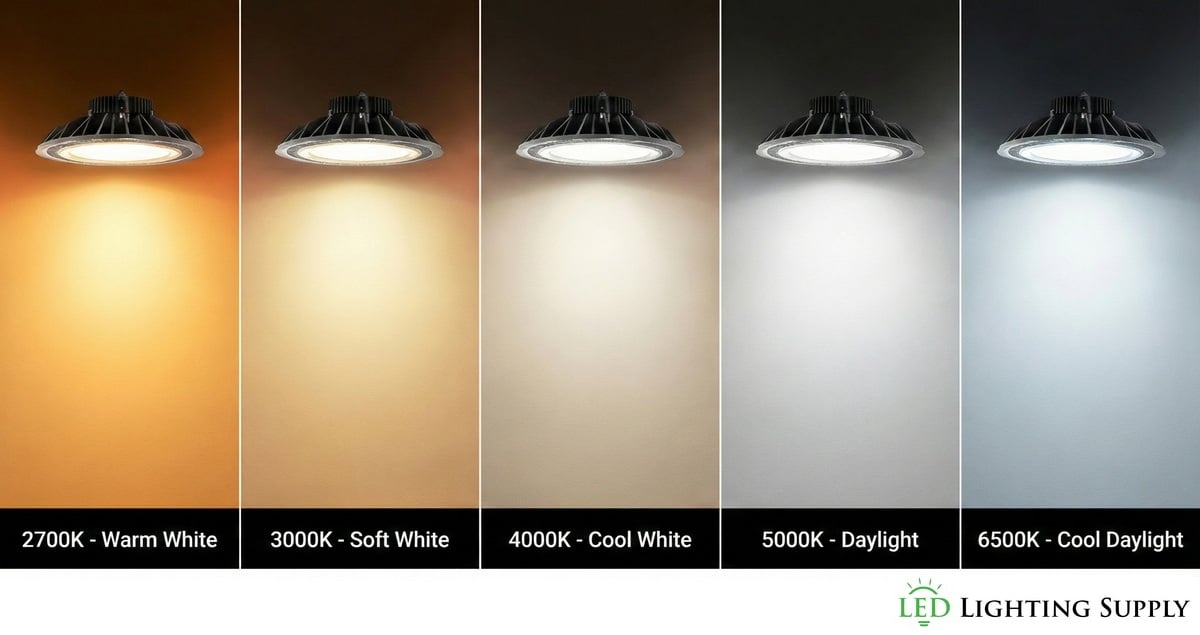
4000K and 5000K color temperatures work best for most canopy applications. Higher Kelvin numbers appear more blue-white, while lower numbers lean toward warm yellow tones. When replacing existing lighting, match these guidelines for a familiar appearance:
- 5000K provides an excellent replacement for Metal Halide fixtures
- 4000K closely matches High-Pressure Sodium or fluorescent lighting color
Adding Controls to Your LED Lights Can Save You Even More Energy
LED conversion reduces electricity consumption substantially. Intelligent lighting controls amplify these savings by ensuring fixtures operate only when needed.
Photocells for Night Operations
- Photocells automatically detect ambient daylight levels for precise operation timing
- Fixtures activate at dusk and deactivate at dawn, regardless of season
- These sensors respond only to actual light conditions, not preset schedules
Motion Sensors turn the Lights on when Motion is detected
- Motion sensors maximize energy efficiency through occupancy-based operation
- Fixtures maintain low-level illumination until motion triggers full brightness
- Canopy applications benefit significantly from this intelligent control strategy
Best Applications for LED Canopy Lights
- Gas stations require all-weather reliability and 24/7 operation. Surface or recessed canopy fixtures with IP65 ratings handle rain, snow, and temperature extremes.
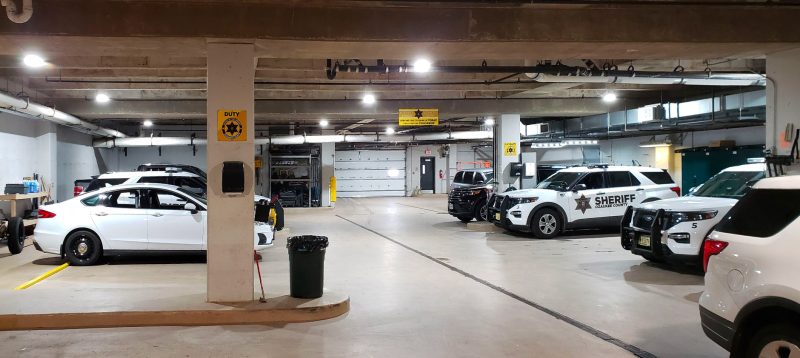
- Parking garages need uniform coverage across large areas with minimal ceiling clearance. Wide-angle optics eliminate shadows that create security concerns.
- Garage Lighting benefits from instant-on LED performance and superior color rendering. Motion sensors save energy during off-peak hours while maintaining safety.
- Outdoor spaces exposed to weather elements require fixtures with corrosion-resistant housings. Many models offer 10-year warranties for continuous exterior use.
- Covered Walk paths demand even illumination to prevent trip hazards and liability issues. Low-profile fixtures minimize visual obstruction while providing adequate foot-candle levels.
- Low Bay Applications with 12-20 foot ceiling heights achieve optimal distribution patterns. These installations typically replace 400W metal halide with 100-150W LED equivalents.
Safety and Performance Certifications
All our fixtures carry essential certifications, including DLC Premium, UL Listed, and ETL Listed approvals. These certifications ensure safety, performance, and energy efficiency while qualifying your project for utility rebates and tax incentives. DLC Premium certification guarantees the highest efficiency standards and maximum rebate eligibility.
The Design Lights Consortium maintains rigorous standards for commercial LED fixtures, and its Qualified Products List ensures energy efficiency and performance reliability. Additionally, Underwriters Laboratories provides comprehensive safety testing standards through their lighting safety certification programs, verifying that fixtures meet electrical safety requirements for commercial installations.


Warranty and Warranty Support
All our lights come with at least a 5-year warranty, and all warranty support is based in the USA. We take customer support seriously, and helping you with a warranty claim is important to us. Our experienced support team understands the importance of keeping your lighting operational and will work quickly to resolve any warranty issues.