LED Sports Field Lighting Guide for Schools, Parks, and Community Facilities
This guide is written for schools, park districts, municipalities, and community sports facilities that need reliable LED lighting for baseball fields, softball fields, soccer fields, and football fields.
This is not professional stadium lighting guidance. The focus here is recreational, school, and college-level facilities where safety, uniformity, energy savings, and long-term reliability matter more than broadcast specs. If there is one theme throughout this guide, it is this: sports lighting is engineered, not estimated. Foot candles, uniformity, pole height, optics, and electrical capacity all work together. Skipping one step usually creates expensive problems later.
Tip: Do not guess on sports lighting. Start with a free photometric lighting plan so you can see foot candles, uniformity, fixture count, optics, and aiming instructions before you buy anything.
Why sports lighting design matters more than fixture wattage
Most lighting problems are not caused by the fixture itself. They are caused by poor planning.
- Bright averages with dark playing areas
- Excessive glare for players
- Light spills into neighboring properties
- Overloaded or undersized poles
- Incorrect beam angles that waste light
All of these issues are preventable with proper layout and photometric planning. If you are comparing fixtures based on wattage alone, you are skipping the step that actually determines results. Start here if you want the big picture: LED sports lighting.
Baseball and Softball Field Lighting
Baseball and softball fields have very specific lighting needs. The infield and outfield do not receive the same light levels, and uniformity is critical for both player safety and ball tracking.
Typical foot candle levels for baseball and softball
Most baseball and softball fields we design fall into one of these packages. The infield/outfield ratio is always 2:1.
- 30/15 fc (infield/outfield) – common for recreational and practice fields
- 40/20 fc – common for competitive recreational and many school fields
- 50/30 fc – one of the most common targets for school-level play
That 2:1 ratio is intentional. Infield play requires faster reaction time. The outfield needs safe visibility and ball tracking, but it does not need to match the infield levels.
Uniformity requirements for baseball and softball
Uniformity is just as important as brightness. Uniformity is defined as the ratio of average foot candles / minimum foot candles. A ratio of 2.0 or below is ideal for most school and community fields. What improves uniformity:
- Mounting heights 30 feet and above
- More poles, when possible, so light can be distributed from more angles
- Correct optics and aiming (this is where photometrics matter)
Poor uniformity creates dark pockets in the outfield and near foul lines. That is where injuries, missed plays, and complaints usually start.
Pole height and layout considerations
Higher poles improve both uniformity and glare control. When fixtures are mounted too low, players are forced to look into the light source, especially on pop flies and high throws. If you are reusing existing poles, do not assume they are ready for LED just because they held metal halide. Structural capacity must be verified. If you need help with poles, start here: request pole pricing.
Optics (beam angles) used for baseball and softball
Common beam angles are 30, 45, and 60 degrees. Which optics are correct depends on pole spacing, mounting height, infield vs outfield coverage, and spill light limitations. There is no universal optic that works for every field. Optics should be selected through a lighting plan, not guesswork. If you want a baseball-specific layout, start here: free baseball field lighting plan.
Electrical and color temperature considerations
Most fields fall in the 100-277V range. We can also design systems up to 480V when required. The most common color temperature is 5000K. This is the standard replacement for metal halide and provides a clean, bright white light. Some facilities choose 4000K for a warmer appearance preference.
Metal halide replacement guidance
- Our 400W / 56,000 lumen fixture can replace 1000W metal halide
- Our 600W / 84,000 lumen fixture can replace 1500W metal halide
Final fixture quantities and aiming still need to be confirmed by photometric analysis.
For general fixture options and layouts, see
Spartan Sports Park Improves Field Lighting With LED Flood Lights Case Study
The Backstory:
Spartan Sports Park recognized that their existing 1000-watt metal halide fixtures were falling short on the field. Suboptimal light levels negatively impacted player performance, while the energy demands of the outdated system drove operating costs higher than necessary. They reached out to LED Lighting Supply seeking a custom solution built for their baseball field requirements.
The Customer's Challenge:
The metal halide fixtures were inefficient, resulting in a significant energy expense. Additionally, uneven light levels on the field created safety risks for both players and sideliners.
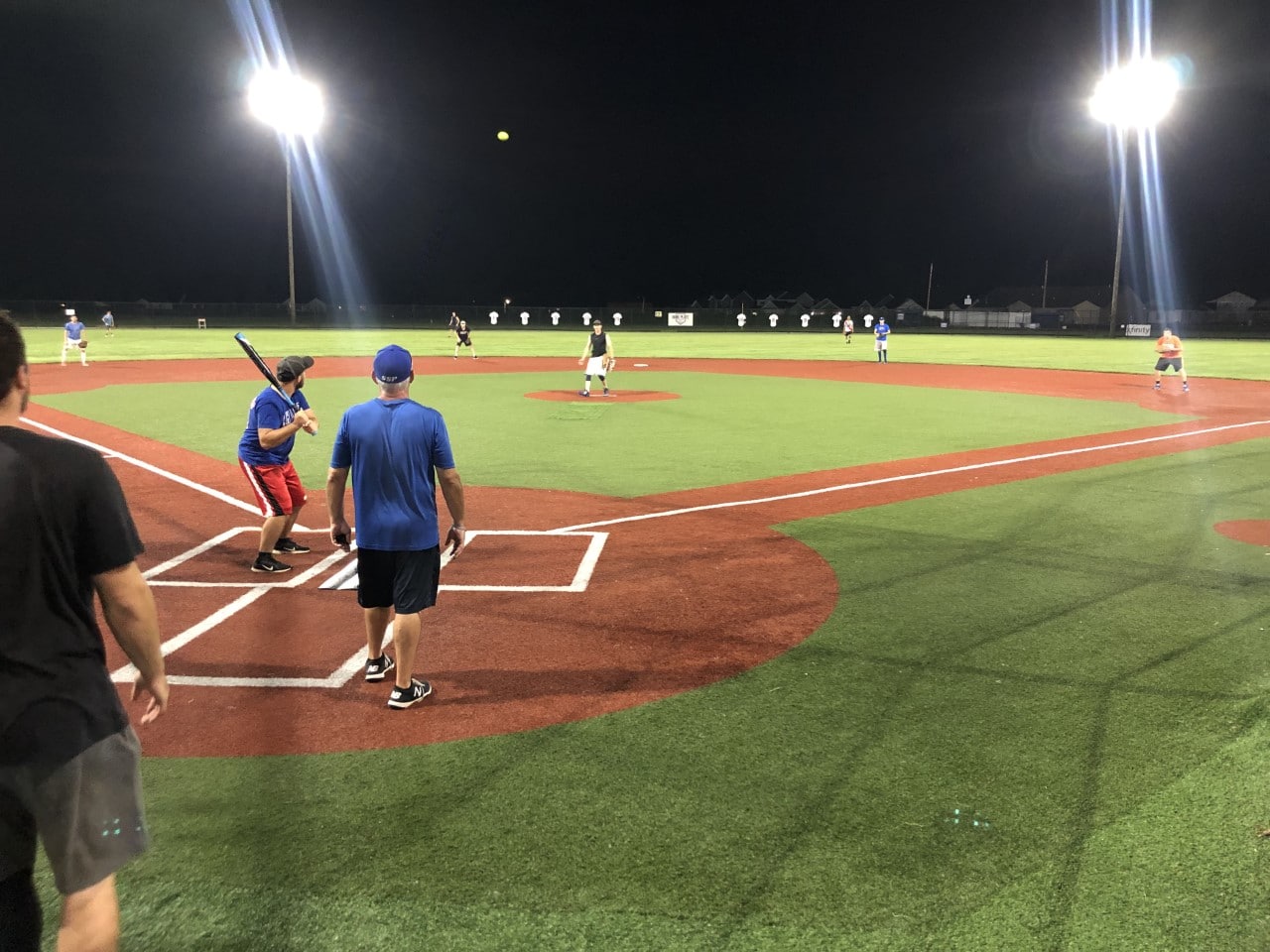
Lighting Plan We Created for the Customer
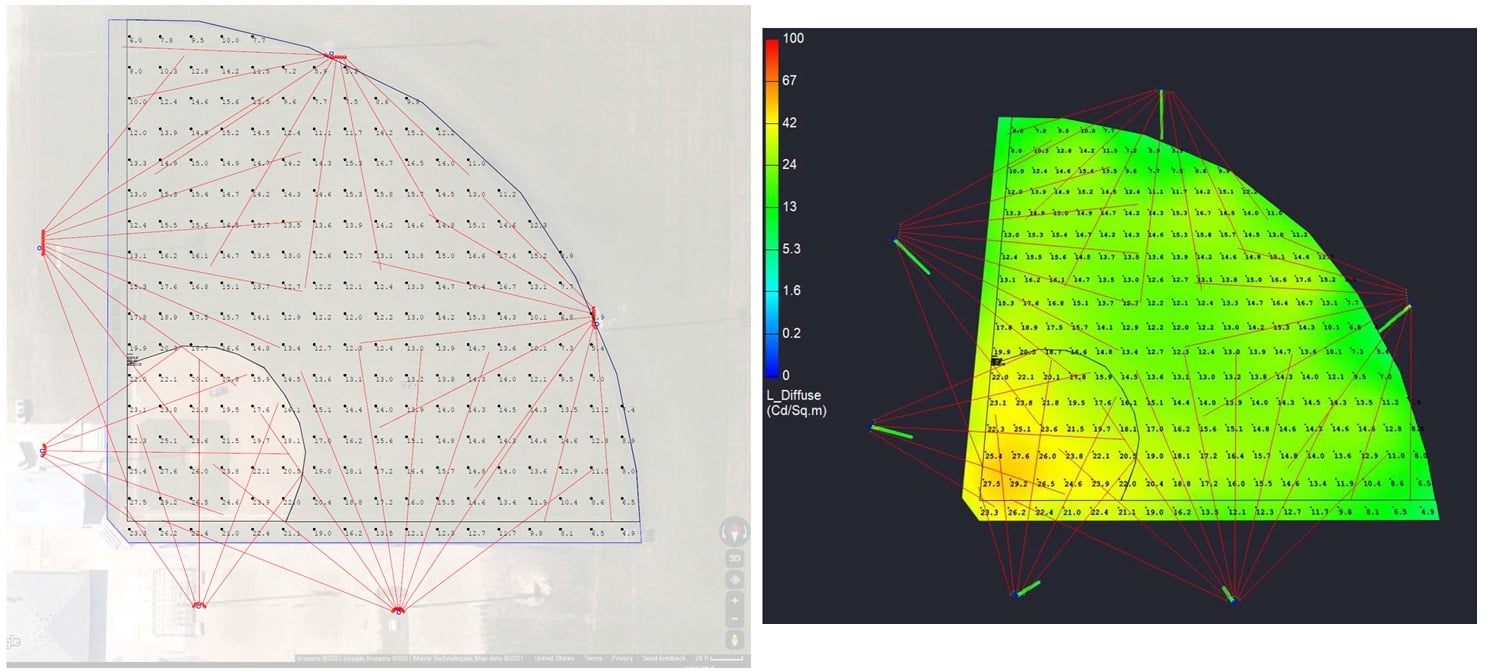
Lighting Plan Metrics:
- Mounting Height: 25 feet
- Infield Foot Candles Achieved: 20 FC
- Outfield Foot Candles Achieved: 13 FC
- Product(s) Used: MLLG-AG-LED-IMF-400-5-[Optic]-TR-[V]
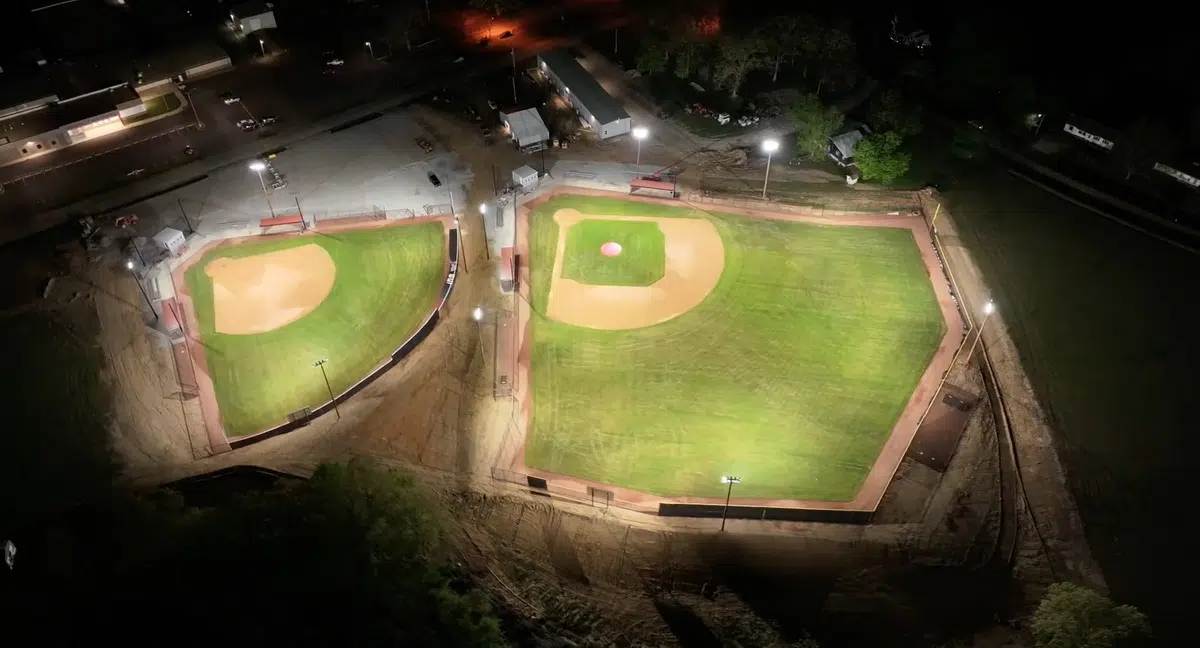
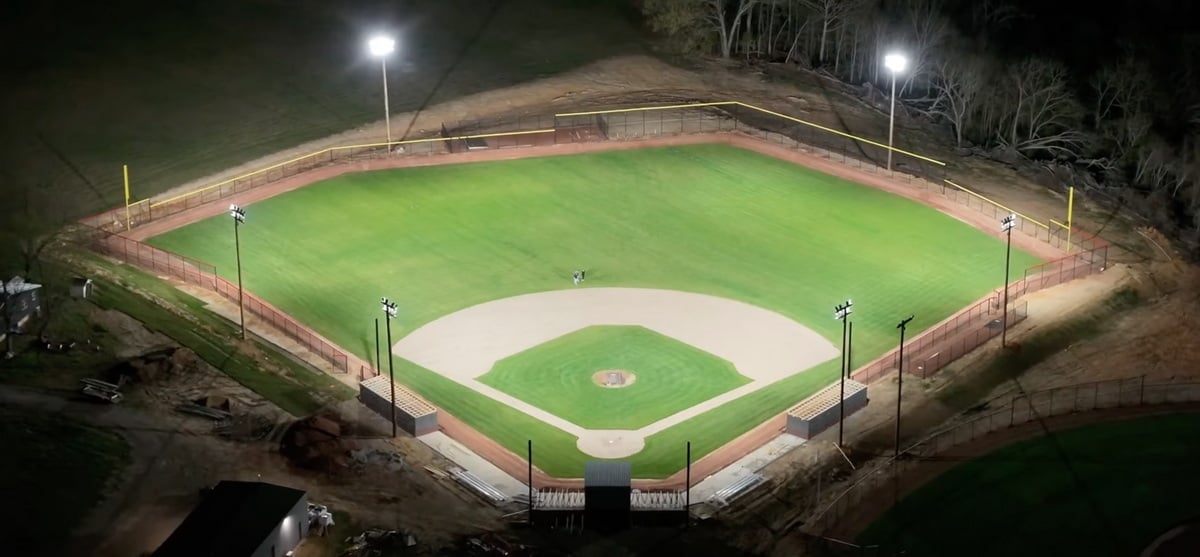
Case Study: Conversion of existing lighting in Baseball / Softball Field to LED Lighting Supply 600 Watt LED Sports Lights at Gainesville High school in Gainseville, MO
|
After: 600 Watt LED Area Sports Flood Light | 84000 Lumens |
After: 600 Watt LED Area Sports Flood Light | 84000 Lumens |
 |
 |
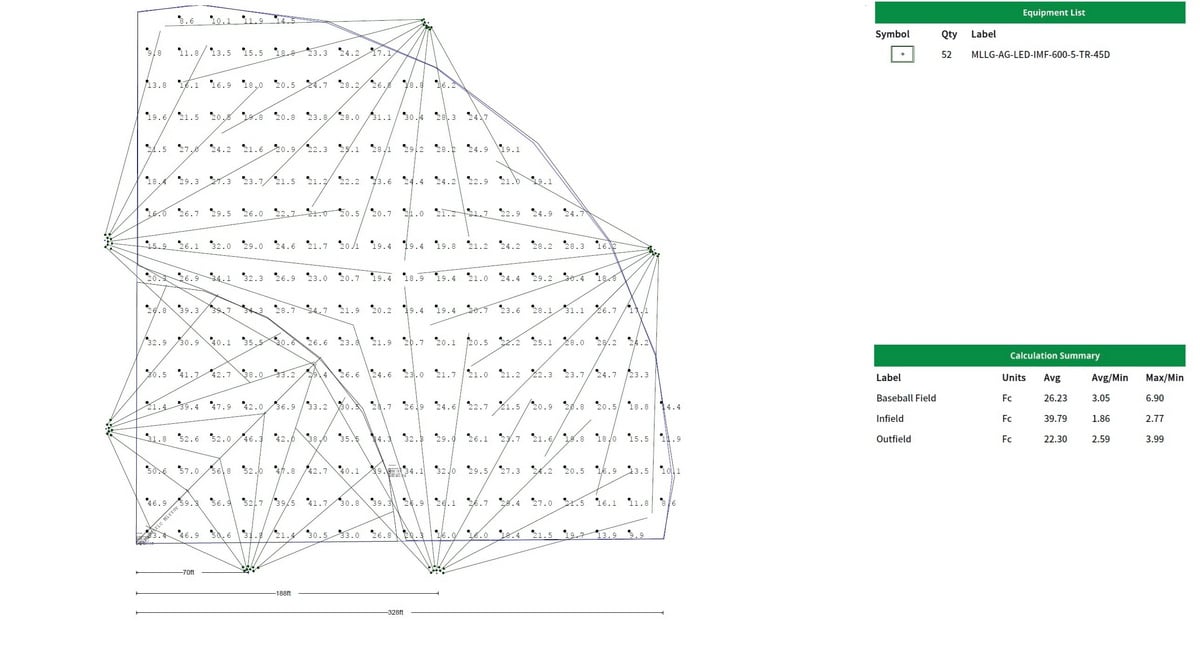
Lighting Plan We Created for the Customer
|
Lighting Plan |
Heat Map |
 |
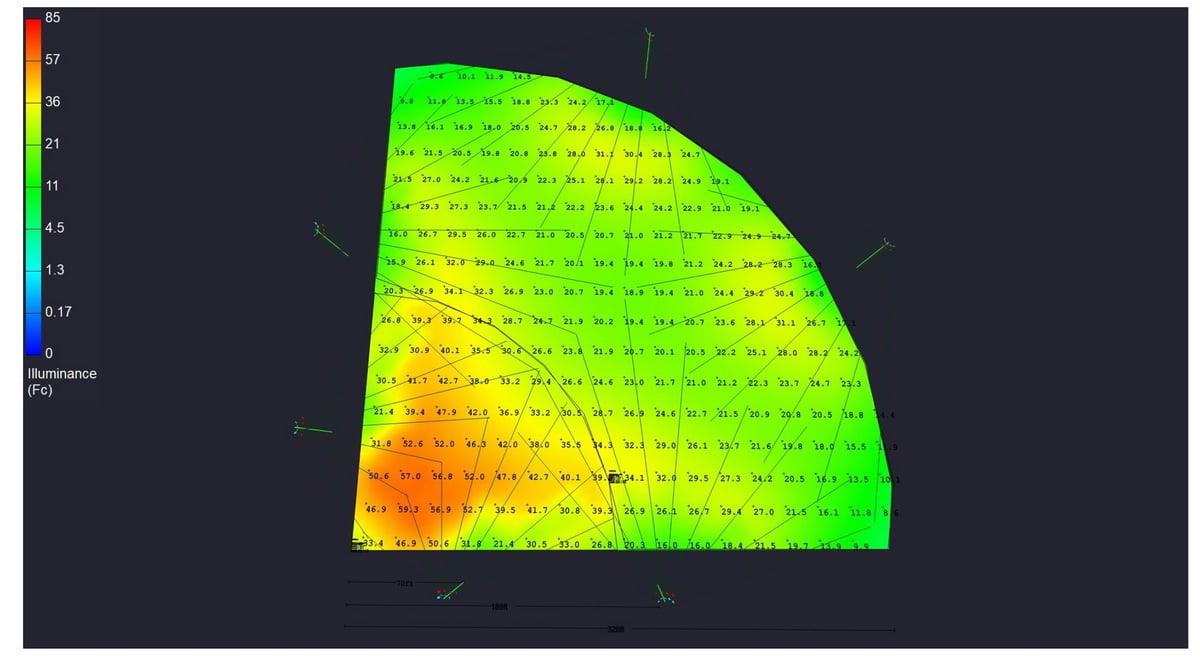 |
Baseball / Softball Field Lighting Installation Plan Metrics
- Mounting height: 47 and 50 ft
- Fixture Used: MLLG-AG-LED-IMF-600-5-[Optic]-TR-[V]: 600 Watt LED Flood Light | 84000 Lumens | 5000K | 100V-277V or 277V-480V
- FC achieved: 39.79 FC (infield), 22.30 FC (outfield) average
- Uniformity (Avg/Min): 2.35
Soccer and Football Field Lighting
Soccer and football fields share many lighting characteristics at the school and community level. Many facilities also use the same field for multiple sports, which makes balanced design even more important.
Typical foot candle levels for soccer and football
For most school, park, and community facilities, we design soccer and football fields in the 20 to 60 foot candle range.
- Lower levels are typically used for practice and recreational play
- Higher levels are used for competitive games, shared-use fields, and facilities with spectator seating
Designing beyond what you need usually increases glare and spill light issues without improving playability for non-professional fields.
Uniformity and player safety
Uniformity is critical for soccer and football because players spend more time looking upward and across the field. Target a uniformity ratio of 2.0 or below (average fc / minimum fc) for a well-designed field. Uniform lighting improves:
- Ball tracking on passes and kicks
- Depth perception during play
- Reduced eye strain and glare
Pole height and count
Mounting heights of 30 feet and above are common for school and community soccer and football fields. Higher poles reduce glare and improve distribution across wide areas. More poles generally improve uniformity and reduce harsh shadows, especially near midfield and goal areas.
Optics and beam control
Common beam angles are 30, 45, and 60 degrees. Soccer and football fields require careful optic selection to prevent glare, reduce spill light into nearby properties, and maintain even coverage across large rectangular areas. Never guess optics. Get a plan:
Voltage and color temperature
Most facilities operate on 100-277V systems. Many schools and municipalities also use 277-480V, and we can design up to 480V. Voltage should always be verified before ordering. The most commonly specified color temperature is 5000K.
Metal halide replacement guidance
- Our 400W / 56,000 lumen fixture can replace 1000W metal halide
- Our 600W / 84,000 lumen fixture can replace 1500W metal halide
Final quantities depend on pole layout, mounting height, and uniformity targets. Start with a free photometric plan, so you know what the field will look like before installation.
For general fixture options and layouts, see
What should always be verified before ordering sports lighting
Regardless of sport, these items should always be confirmed before fixtures are ordered:
- Target foot candle levels based on actual use
- Field dimensions and orientation
- Existing pole height, condition, and structural capacity
- Electrical voltage and circuit capacity
- Spill light and glare concerns
- Maintenance access to fixtures
If we provide a lighting plan, you will receive:
- Fixture quantities and wattages
- Beam angle and optic selections
- Aiming notes for installation
- Calculated foot candles and uniformity ratios
Note: Final fixture selection and installation must comply with local electrical codes, OSHA requirements, and NFPA standards, and must be performed by qualified, licensed professionals.
Safety and Performance Certifications
Sports lighting is safety-critical equipment installed high in the air, exposed to weather, and expected to work on schedule. Certifications matter. Our sports lighting fixtures commonly include:
- UL Listed
- ETL Listed
- DLC Premium
- FCC Part 15
- RoHS compliant
- IP66 enclosures
If you are comparing quotes, ask for the certification list in writing and confirm you are being quoted sports-rated fixtures, not general-purpose flood lights.
Warranty and Warranty Support
All our lights come with at least a 5-year warranty, and all warranty support is based in the USA. We take customer support seriously, and helping you with a warranty claim is important to us. Our experienced support team understands the importance of keeping your lighting operational and will work quickly to resolve any warranty issues.