How to Replace 1500 Watt and 2000 Watt Metal Halide Fixtures with LED
What Does it Take to Replace 1500 Watt and 2000 Watt Metal Halide with LED?
Quick Answer: A 1500-watt metal halide fixture is typically replaced by a 500 to 750 watt LED delivering approximately 60,000 to 75,000 effective lumens. A 2000 watt metal halide is commonly replaced by an 800 to 1000 watt LED producing 100,000 to 120,000 effective lumens, depending on mounting height, beam angle, and application.
This typically results in 60-75% energy reduction while improving light quality, uniformity, and long-term reliability.
Important: High-wattage LED installations often require electrical modifications. Consult with a qualified electrician to ensure proper installation, code compliance, and safety.
Metal halide fixtures dominated commercial lighting for decades before LED technology revolutionized the industry. While they delivered bright illumination at reasonable upfront costs, their inefficiency and maintenance demands made them costly to operate. Based on our 15+ years of serving commercial customers, these high-wattage metal halides appear most frequently in demanding applications:
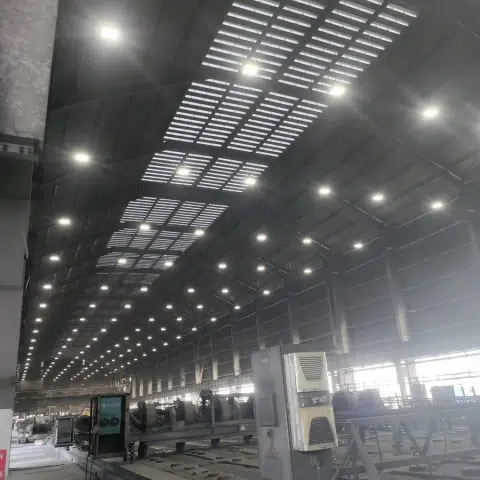
- High bay lighting for warehouses, manufacturing, and hangars
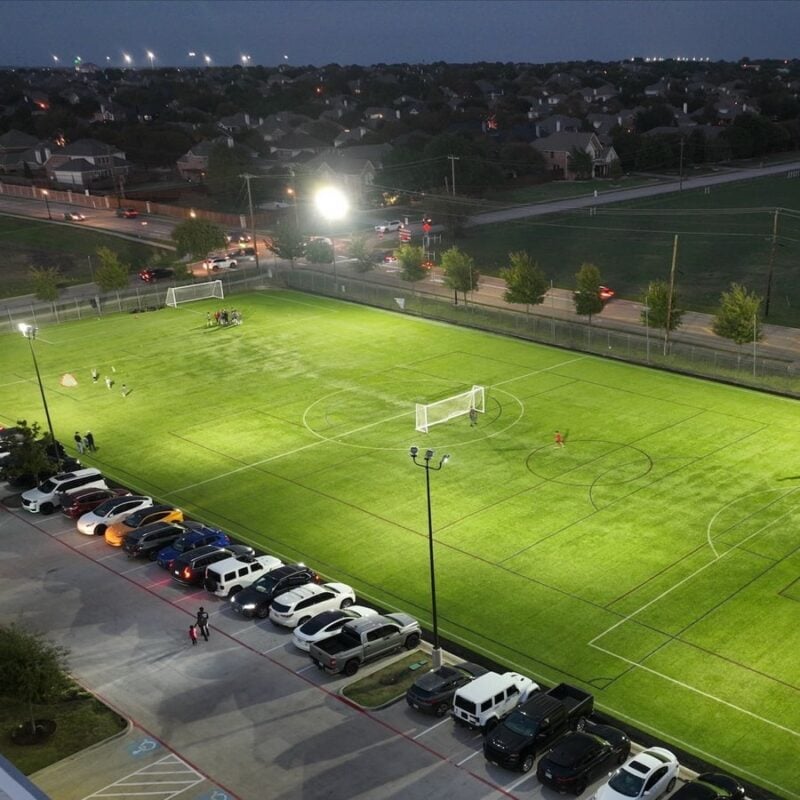
- Sports and stadium lighting for fields, arenas, and racetracks
- High-output flood lighting for perimeter, security, and large outdoor areas
Converting 1500-watt and 2000-watt metal halides shares similarities, but each presents unique considerations. Many customers approach LED selection using outdated metal halide thinking – choosing fixtures by wattage rather than light output. This approach leads to poor results because LED efficiency makes wattage comparisons less meaningful.
Modern LED fixtures typically deliver superior light quality, last significantly longer, and consume 60-75% less energy than comparable metal halides. We’ve handled thousands of these conversions over the years, and the cost savings often justify replacement within 2-3 years through reduced energy bills, depending on usage patterns and utility rates.
Critical Differences Between Metal Halide and LED Performance
Metal halide selection relies on wattage because their efficiency remains relatively consistent across manufacturers. LED fixtures vary dramatically in efficiency, making lumens the primary comparison metric. A 500-watt LED can easily outperform a 1500-watt metal halide while using three times less electricity.
Beyond energy consumption, LED fixtures typically deliver better light quality. Most LED fixtures achieve 80+ CRI compared to metal halide’s typical 65-70 CRI rating. Higher color rendering means you may need fewer lumens to achieve the same visual performance.

Metal halide lamps scatter light in all directions, requiring reflectors that can absorb or redirect 20-40% of the generated lumens. LED fixtures focus light more precisely where needed using built-in optics and selectable beam angles. We typically recommend 60-degree beams for general high bay applications and 25-degree beams for heights above 30 feet.
Lumen maintenance creates another significant advantage for LED technology. Metal halides lose substantial brightness over their lifetime while maintaining the same energy draw. Quality LED fixtures typically maintain 90%+ lumen output after 50,000 hours of operation.
LED fixtures also produce light in the visible spectrum more efficiently than metal halides. Metal halide lamps generate significant energy in infrared and ultraviolet ranges that don’t contribute to useful illumination, while LEDs focus their energy output in the visible light spectrum where human eyes can utilize it effectively.

High-Wattage Metal Halide Replacement Applications
Converting 1500-watt and 2000-watt metal halides involves some of the most demanding lighting applications we encounter. These powerful fixtures illuminate expansive areas where light quality and reliability directly impact safety and performance:
- Baseball Fields using LED baseball field lights
- Soccer Fields using LED soccer field lights
- Football Fields using LED football field lights
- Sports Fields using LED sports field lights
- Race Tracks using LED race track lights
- Factories and Manufacturing using LED factory lights
- Airplane Hangars using LED aircraft hangar lights
Success in these environments depends on several interconnected factors. Mounting height affects beam angle selection. Ambient conditions influence fixture construction requirements. Usage patterns determine dimming and control needs. We evaluate each project individually because standardized solutions may not meet demanding application requirements.
Lumen Requirements for High-Performance LED Conversions
| Existing Metal Halide | Typical LED Wattage | Target LED Lumens | Common Applications |
|---|---|---|---|
| 1500W Metal Halide | 500 to 750W LED | 60,000 to 75,000 lm | High bays, indoor sports, manufacturing, high-ceiling warehouses |
| 2000W Metal Halide | 800 to 1000W LED | 100,000 to 120,000 lm | Stadiums, sports fields, aircraft hangars, racetracks, and large area security lighting |
Determining proper light levels requires understanding your specific application rather than simply matching metal halide wattage. Based on thousands of successful conversions, we typically recommend these lumen ranges:
- Indoor Applications: Target 60,000 to 120,000 lumens, depending on mounting height and visual task requirements
- Outdoor Applications: Plan for 75,000 to 120,000+ lumens based on area coverage and ambient light conditions
Professional lighting design becomes essential at these power levels. Our lighting plans provide detailed photometric analysis showing light distribution, uniformity ratios, and recommended fixture placement. This helps eliminate guesswork and improves the likelihood that your investment delivers the expected performance.
Voltage Compatibility and Installation Considerations
Most high-wattage LED fixtures include drivers that accommodate common voltage inputs such as 120-277V, 347-480V, and 100-347V configurations. However, compatibility should always be verified with your existing electrical system.
For installations above 25 feet, we typically recommend fixtures with narrow beam angles and higher lumen output to maintain ground-level illumination. Ceiling heights below 20 feet often work well with wide beam angles and moderate wattages to help prevent hot spots and glare.
Installation Note: High-wattage LED conversions may require electrical upgrades, new control systems, or structural modifications. Always consult with qualified professionals to ensure safe, code-compliant installation.
Why High-Wattage LED Conversions Require Professional Verification
At the 1500W and 2000W levels, LED replacements are not interchangeable. Small changes in mounting height, optic selection, or fixture spacing can significantly affect performance, glare, and uniformity.
For this reason, wattage and lumen ranges should be treated as general guidance only. Final fixture selection should always be verified through professional lighting design and confirmed against local codes, safety standards, and application-specific requirements.
In large or safety-critical environments, improper fixture selection can lead to under-lighting, excessive glare, or inefficient energy use – all of which can increase operational costs and safety concerns.
Expert Support for Your LED Conversion Project
High-wattage metal halide conversions represent significant investments that benefit from precise planning. Our experienced lighting specialists have guided thousands of commercial customers through complex LED conversions over the past 15+ years.
Our services include:
- Complimentary custom lighting plans with photometric analysis
- Detailed fixture placement and light distribution calculations
- Energy savings projections based on your utility rates
- Technical support throughout your project
Professional lighting layouts help reduce costly mistakes by showing exact fixture placement, light distribution patterns, and uniformity calculations before you purchase. Our team also provides energy savings projections based on your current usage patterns, helping establish realistic expectations for your investment.
Ready to discuss your high-wattage LED conversion? Contact our lighting specialists for a consultation and custom lighting plan tailored to your facility’s specific requirements.