The Buyers Guide to Outdoor Security Lighting (Commercial & Industrial)
Outdoor security lighting does more than “make things brighter.” When it’s selected and positioned correctly, it improves visibility for staff and visitors, helps reduce dark zones around buildings and work areas, and supports clearer camera coverage. This guide breaks down five of the most common commercial and industrial fixture types used for exterior security lighting, including what each one is designed to do, where it typically performs best, and which mounting approaches often make sense for the job.
The U.S. Department of Energy notes that LED outdoor lighting can deliver significant energy savings compared to traditional technologies like metal halide and high-pressure sodium. That fixture selection and placement play a major role in performance. When planning an upgrade or expansion, it helps to focus on the right fixture type first, then refine optics, controls, and mounting details.
Technical Guidance: This guide provides general information about commercial LED security lighting fixture types. Final fixture selection, electrical design, and installation should be performed by qualified lighting professionals and licensed electricians in accordance with local codes and site-specific requirements.
Start Here: How to Think About Outdoor Security Lighting
- Define the security goal: perimeter visibility, entry/egress coverage, wide-area yard illumination, or targeted “see it from far away” lighting.
- Match fixture type to the surface being lit: walls and doors vs. lots and lanes vs. very large open yards.
- Choose the mounting strategy early: wall, pole, roofline, or high mast structures change distribution requirements.
- Plan for controls: photocells (dusk-to-dawn), motion sensors, and 0-10V dimming can add meaningful savings and automation.
- Confirm environmental requirements: wet-location ratings (commonly IP65+), impact resistance (such as IK08 in high-abuse areas), and voltage compatibility.
- Verify regulatory compliance: check local dark-sky ordinances, light trespass limits, and electrical code requirements.
1) LED Wall Packs: Building-Edge Security and Perimeter Coverage
LED wall pack lights are wall-mounted fixtures designed to illuminate building exteriors, entrances, pathways, and perimeter zones. They’re frequently used for security lighting because they can fill in shadow lines close to the structure, exactly where people walk, load, and access doors.

What Wall Packs Do Best
- Perimeter security lighting: reduces dark areas around walls, corners, and entrances.
- Near-building visibility: supports safer navigation for staff, deliveries, and security patrols.
- Camera support: more uniform light can improve visibility in typical surveillance views.
Common Wall Pack Light Distributions (and Why They Matter)
- Full cutoff: directs light downward to minimize spill and light pollution; often used where light trespass must be controlled.
- Forward throw / non-cutoff: throws light down and outward for wider coverage; a common security choice around building perimeters.
- Semi-cutoff: a middle ground. Adds forward illumination while reducing spill compared to non-cutoff designs.
- Dusk-to-dawn wall packs: fixtures with integrated photocells for automatic nighttime operation.
Mounting Considerations
Wall packs are typically mounted directly to exterior walls over junction boxes or existing wall pack footprints. Many installations prioritize matching existing footprints to simplify retrofits and reduce installation time. Installation should be performed by qualified electricians in accordance with local electrical codes and manufacturer specifications.
Where Wall Packs Are Commonly Used (Commercial & Industrial)
- Building perimeters & entrances
- Loading docks & exterior work zones
- Warehouses, distribution centers, and manufacturing exteriors
- Parking garages and perimeter walkways
- Storage facilities and site pathways
Planning tip: Full cutoff options can be a strong fit where dark-sky requirements or spill control are priorities, while forward throw patterns are often chosen when broader coverage is the top security concern.
2) LED Flood Lights: Versatile, Aimable Light for Targeted Security
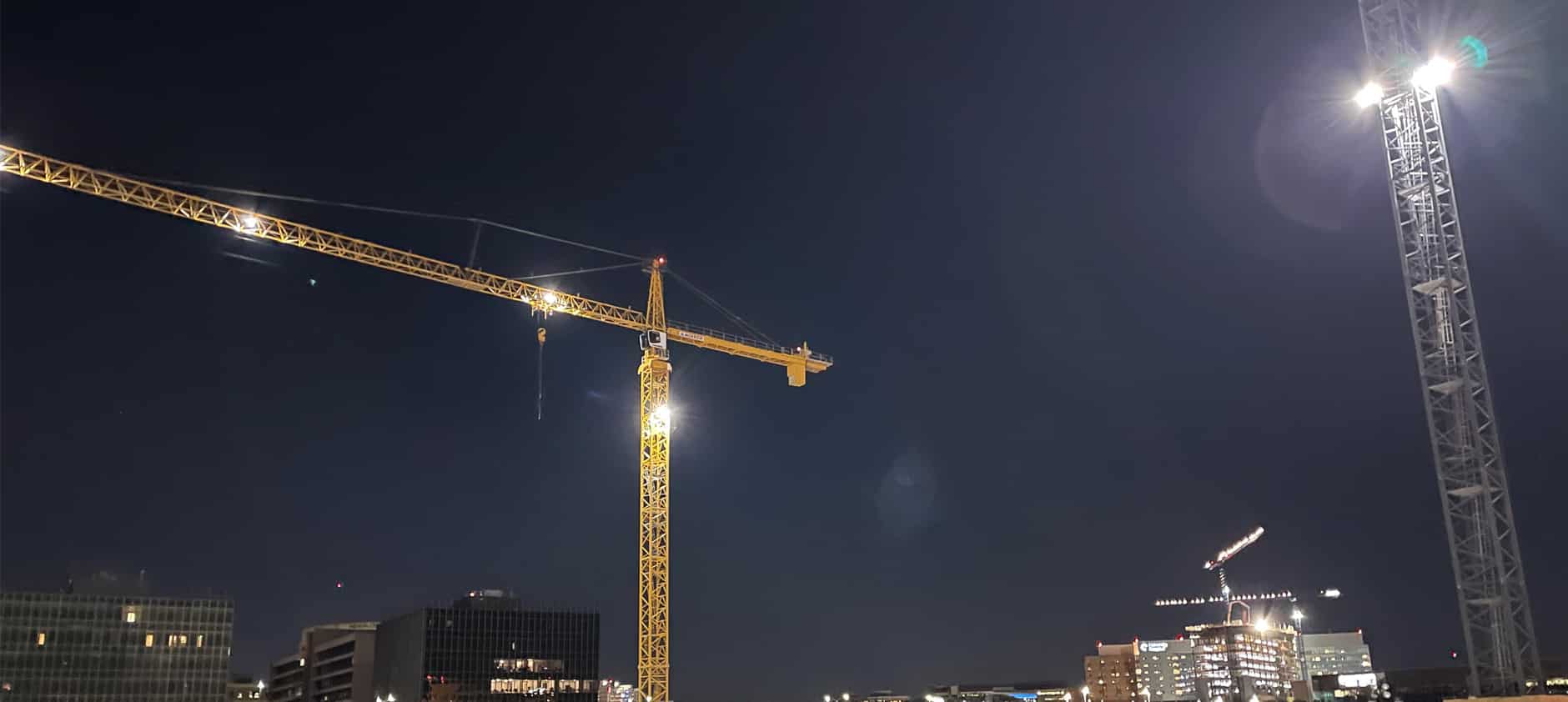
Commercial LED flood lights are one of the most flexible tools in outdoor security lighting. They’re commonly used on poles, walls, and roofs to illuminate open areas, perimeters, and specific targets. Flood fixtures can be configured with beam angles typically ranging from 10 to 120 degrees, which makes them useful for everything from tight, long-throw coverage to broad-area illumination.
What Flood Lights Do Best
- Targeted illumination: aim the light exactly where you need it. This includes gates, yards, loading zones, signage, or long fence lines.
- Large open areas: a strong option when security coverage is needed across open fields or wide spaces.
- Specialty applications: higher-output configurations can serve in sports fields and area lighting applications.
Beam Angle Basics (Why It Matters)
Flood lighting isn’t “one pattern.” Beam angles range widely, and selection impacts glare control, coverage, and how many fixtures you typically need.
- Very narrow to narrow beams (10-29°): useful for long throw, precise lighting like billboards or distant targets.
- Medium beams (29-70°): often used where moderate mounting heights need balanced coverage.
- Wide beams (70-120°+): common for general area lighting and broader wash coverage.
Mounting Options You’ll See in the Field
- Pole mounting: for perimeter lanes, yards, and open areas where height improves reach.
- Wall mounting: for building-side security, loading areas, and controlled aiming.
- Roof mounting: for larger facilities, where height and angle help reduce fixture count.
Commercial & Industrial Applications
- Large parking lots and perimeter zones
- Construction sites and temporary/portable mounting situations
- Airport perimeter lighting and harsh-weather environments (IP65+)
- Overhead cranes, industrial yards, and manufacturing exteriors
- Security & perimeter lighting where motion sensors and photocells are desired
Practical tip: As mounting height increases, narrower optics are commonly used to concentrate light on the target area. When mounting heights are lower, wider beam angles can help create smoother coverage with fewer hot spots.
3) LED Shoebox Lights: Pole-Mounted Area Lighting for Lots and Large Spaces
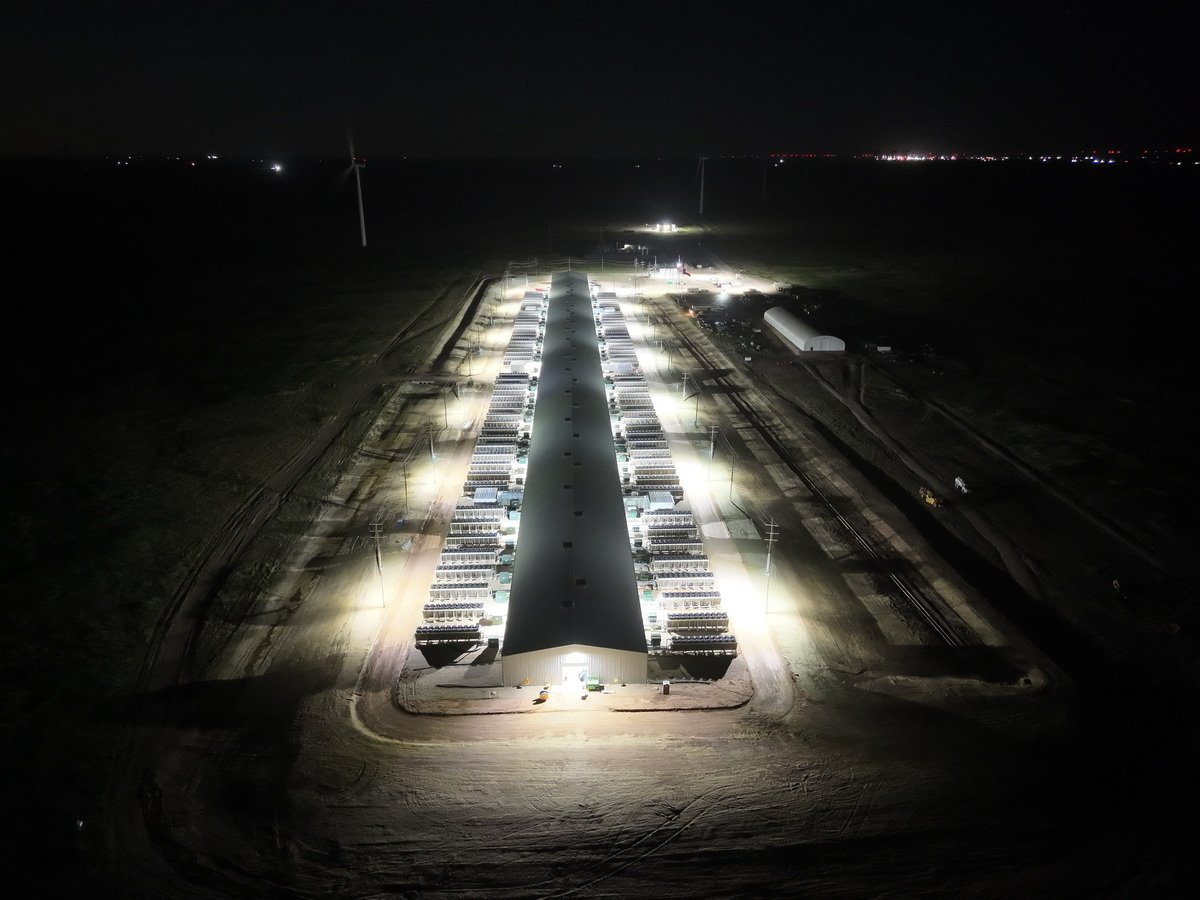
LED shoebox lights (also widely referred to as parking lot lights or area lights) are pole-mounted fixtures built for broad, uniform illumination across commercial outdoor areas. Their rectangular housing uses precision optics to distribute light downward and outward, helping reduce dark areas while limiting wasted upward light.
What Shoebox Lights Do Best
- Uniform lot lighting: supports safer movement for vehicles and pedestrians.
- Wide-area security: reduces dark corners and helps maintain more consistent visibility across a site.
- Efficient distribution: optics are designed to push light away from the pole where it’s needed.
Mounting Options Commonly Used
- Slip fitter: often used on round poles with standard tenons.
- Yoke mount: enables aiming flexibility for unusual layouts or mounting surfaces.
- Trunnion/surface mounting: used when attaching to buildings or structures where pole mounting isn’t practical.
Optics: Type Distributions and How They’re Typically Applied
- Type 3: forward-throw pattern often used on perimeters to push light outward.
- Type 5: more symmetrical distribution, often used for center-of-area mounting.
Commercial & Industrial Applications
- Parking lots and parking facilities
- Industrial facilities and large outdoor work areas
- Pathway illumination across commercial sites (with appropriate mounting and spacing)
- Large outdoor areas where uniformity is a priority
- Recreational and multi-use outdoor spaces in commercial settings
Controls note: Many shoebox fixtures are paired with dusk-to-dawn photocells for automatic operation. Motion sensors can add another layer of energy savings by dimming during low-activity periods.
4) LED Pole Top Lights: Downlighting for Paths and Lower-Mounted Poles
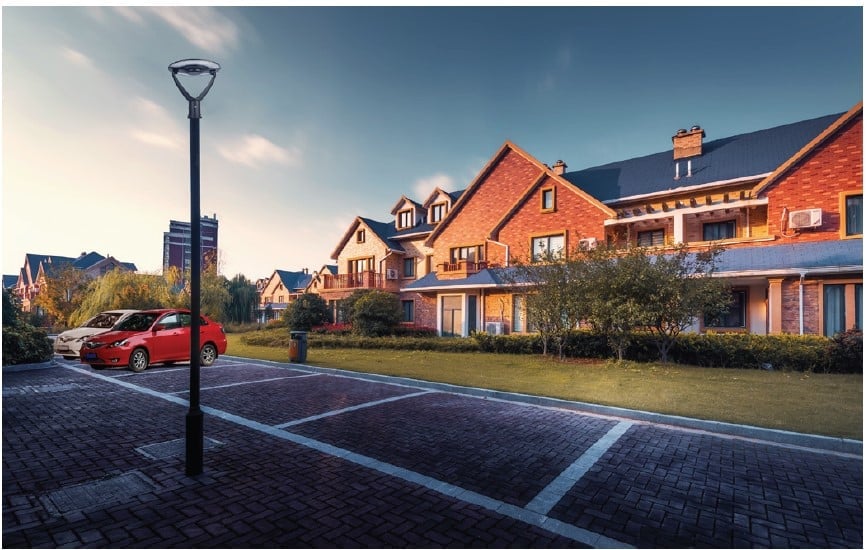
LED pole top (post top) lights are designed for effective downlighting on poles typically under 20 feet. They’re a common choice for pedestrian paths, corridors between buildings, and smaller parking areas where a controlled, downward distribution is preferred.
What Pole Top Lights Do Best
- Pathway and corridor visibility: consistent downlighting reduces trip hazards and improves navigation.
- Lower-height site lighting: supports security in areas where tall poles aren’t used or desired.
- Glare control potential: downlight-focused designs can be a strong fit where comfort and spill control matter.
Mounting Considerations
Pole top fixtures typically mount to a pole’s tenon/diameter interface. Matching the fixture’s mount size to the existing pole (or using appropriate adapters) is a key step in retrofit planning. Proper mounting hardware and installation by qualified professionals are essential for safety and performance.
Common Commercial Applications
- Pedestrian pathways (often 8-12 ft mounting heights)
- Parking areas (often 15-20 ft mounting heights)
- Building corridors and walkways between structures
- Parks and greenspaces in commercial campuses
- Outdoor play areas and shared common areas (commercial campuses and facilities)
Specification note: Many pole top fixtures are available with color-adjustable CCT and wattage-selectable output for on-site tuning. Photocell compatibility is also common for dusk-to-dawn operation.
5) LED High Mast Lights: High-Output Illumination for Massive Outdoor Areas
LED high mast lights are engineered for large-scale commercial and industrial spaces that require powerful illumination from extreme heights. These projects often involve multi-fixture arrays and careful optic selection to avoid dark spots and over-illumination. Typical wattages range from 210 to 750 watts, and they are commonly used to replace 750 to 2000 watt metal halide systems while targeting substantial energy reduction.
What High Mast Lights Do Best
- Wide-area coverage: fewer mounting points can cover very large footprints when designed correctly.
- Industrial-grade durability: commonly specified with rugged ratings such as IP66 and IK08 in demanding environments.
- High-output security: strong option for yards and sites where uninterrupted visibility is essential.
Where High Mast Lighting Is Commonly Used
- Shipyards and ports
- Rail yards
- Container yards
- Large open-area storage facilities
- Power generation plants
- High-security perimeters and large parking areas
- Highways and interchanges
Mounting and Engineering Considerations
High mast retrofits and new designs require professional structural verification. Wind load / EPA (effective projected area), pole and anchor condition, mounting hardware ratings, electrical distribution, and local code requirements must be verified by qualified structural engineers and lighting professionals based on specific site conditions. Improper installation or inadequate structural support can result in equipment failure and serious safety hazards.
Optics note: Higher mounting heights often use narrower beam angles (for example, 15-degree optics may be used at higher heights), while lower mounting heights may use broader options such as 60-degree or 90-degree beams, depending on the coverage goal and site layout.
Controls That Commonly Improve Security Lighting Performance
- Photocells (dusk-to-dawn): automatic on/off based on ambient light, reducing manual operation.
- Motion sensors: can reduce operating hours by dimming during low-activity periods and returning to full output when activity is detected.
- 0-10V dimming: enables scheduled or automated light-level control for energy management and site needs.
Safety and Performance Certifications
For commercial and industrial exterior lighting, third-party certifications help verify safety, performance, and (where applicable) rebate eligibility. Across the fixture categories in this guide, commonly referenced certifications and ratings include:
- UL Listed or ETL Listed for electrical safety and code compliance
- DLC Premium options typically offer higher efficiency and may be required for utility rebate eligibility
- IP65 or higher for wet-location / weather resistance (with some high mast configurations noted as IP66)
- IK impact ratings (such as IK08) for durability in high-abuse environments
- 0-10V dimming compatibility, where controls integration is planned
Warranty and Support
The fixtures described in this guide are commonly available with manufacturer warranties, often 5 years or more, though specific coverage terms vary by manufacturer and product line. When evaluating options, consider both warranty duration and the availability of responsive technical support.
Warranty support can be important after installation, when uptime, troubleshooting speed, and parts handling help determine how quickly exterior areas return to normal operation.
Common Mistakes to Avoid (Across All Fixture Types)
- Choosing by watts instead of light output: use lumen output and distribution/optics to match real coverage needs, especially when replacing HID systems.
- Skipping site-specific planning: lack of proper spacing and distribution planning often creates bright hot spots and dark gaps.
- Mismatching beam angle to mounting height: Narrow beams at low heights can create harsh hot spots; overly wide beams at high heights can waste light and reduce effectiveness.
- Overlooking voltage compatibility: verify the facility voltage and driver requirements (common systems include 120-277V and 277-480V ranges).
- Ignoring spill and light pollution constraints: where required, use distributions that limit spill (such as full cutoff) and position fixtures thoughtfully to reduce trespass.
- Under-specifying weather protection: exterior security lighting commonly targets IP65 minimum for reliable operation in harsh conditions.
- Not planning for controls wiring/placement: photocell placement and sensor strategy should be considered early to prevent cycling issues and to achieve intended energy savings.
- For high mast projects, skipping structural verification: wind load / EPA, pole condition, and mounting hardware suitability must be confirmed by qualified professionals before finalizing an array.
Quick Fixture Match Guide
- Wall Packs: best when the building itself is the mounting surface and the goal is perimeter/entry security.
- Flood Lights: best when you need aimable, targeted light, especially for yards, gates, and long-throw security coverage.
- Shoebox Lights: best for uniform area lighting in parking lots and large commercial outdoor spaces.
- Pole Top Lights: best for downlighting on lower-height poles and pedestrian-scale security around paths and corridors.
- High Mast Lights: best for expansive industrial sites that require high-output illumination from extreme heights.
Important Safety and Compliance Notice: Final fixture selection, electrical design, and installation must comply with local electrical codes, applicable dark-sky or light-pollution ordinances, and workplace safety requirements. All electrical work should be performed by qualified, licensed professionals. For high mast and structural applications, consult with qualified engineers regarding structural adequacy, wind loads, and mounting requirements.