LED Lighting Upgrades for Facility Managers
As a facility manager, you’re responsible for all aspects of the physical infrastructure of an organization. Part of this responsibility is to identify areas where you can increase the efficiency and cost savings of the facilities that you manage. One strategy that you can implement is the upgrade of your existing lighting systems. When developing a case for spending money on lighting system upgrades, it’s important to consider the benefits to determine if it’s worth the investment.
Facility managers must develop a solid return-on-investment (ROI) case for getting capital improvement expenditures approved. No matter what type of facility you manage, the main goal is for it to operate with minimal cost. Upgrading to an LED lighting system is a vital part of accomplishing this goal. An investment in energy-efficient lighting can lead to a substantial ROI, often within two years, depending on usage patterns and existing lighting types.
Upgrades typically save around 40 to 60% on energy costs compared to traditional lighting systems, though actual savings depend on your current lighting type and usage. Improving your lighting setup can be the first step toward a healthier, safer, and more productive work environment.
Facilities such as warehouses and fulfillment centers consist of intricate operations and require smooth workflows. Inadequate or obsolete lighting systems can delay and disrupt processes while increasing the risk of worker injuries.
Light flickering, glare, and improper contrast are all issues that can lead to consequences like eye strain, operational mistakes, and physical injuries. Many older commercial and industrial buildings were constructed before current energy-efficient technologies were widely available. On average, lighting can account for up to one-third of a building’s energy use, and potentially more if the facility has outdated, inefficient lighting.

Types of Facility Lighting: What Do They Do?
Depending on the nature of your business or organization, you’ll likely have a variety of lights that provide specific functions. Here are the basic types of workplace lighting to consider:
- General Lighting provides comfortable, balanced overall light to a space for safe navigation and basic visibility.
- Task Lighting provides focused, glare-free illumination for specific work activities such as quality control, product assembly, or detailed inventory management.
- Accent Lighting is commonly used in break rooms, cafeterias, or lobbies to create comfortable environments and highlight specific architectural features.

The Benefits of LED Lighting for Facilities
Commercial LED lights and industrial LED lights offer significant advantages over traditional lighting types, including HID (high-intensity discharge), fluorescent, and incandescent systems:
- Energy Efficiency: LEDs produce light much more efficiently, requiring less wattage per fixture. This translates to lower electricity consumption and reduced energy costs.
- Environmental Safety: LEDs are free of toxic chemicals such as mercury and lead, making them environmentally friendly with no special disposal requirements.
- Extended Lifespan: Quality LED fixtures can last up to 100,000 hours, depending on the application, significantly reducing replacement and maintenance costs.
- Improved Visual Performance: LEDs enhance alertness and visibility while reducing shadows and improving color recognition, resulting in increased efficiency and productivity.
Signs Your Facility’s Lighting System Needs Upgrading
Consider a lighting upgrade if your facility experiences:
- High utility bills with lighting representing a significant portion of energy costs
- Frequent maintenance issues, including lamp replacements and ballast failures
- Suboptimal light levels, as HID and fluorescent lighting quality degrade over time, making tasks more difficult and potentially unsafe
Missed Opportunities That Signal Upgrade Need
You may also benefit from an upgrade if you’re not taking advantage of available initiatives:
- Environmental and sustainability initiatives: LED upgrades support organizational goals for carbon footprint reduction and energy efficiency
- Smart building integration: Modern LED systems can connect with building automation systems, enabling features like daylight harvesting, occupancy sensors, and advanced controls
- Available incentives: Utility rebates and tax incentives can significantly offset upgrade costs
How to Plan Your Facility Lighting Upgrade
Step 1: Perform a Professional Lighting Audit
A lighting audit involves an on-site assessment of your facility’s current lighting conditions by a qualified professional. The audit identifies where energy-saving improvements can be made in both indoor and outdoor spaces.
The audit provides a detailed report outlining potential energy savings, available rebates and incentives, project costs, and projected ROI. Your existing fixtures may need replacement, retrofitting, or adjustment based on the findings.
Step 2: Build Your Business Case for LED Conversion
LED lights have significantly longer lifespans than traditional lighting, reducing maintenance costs over time. Focus on these key areas:
Identify High-Impact Areas:
- Spaces requiring 24/7 lighting, such as parking garages, stairwells, or security areas
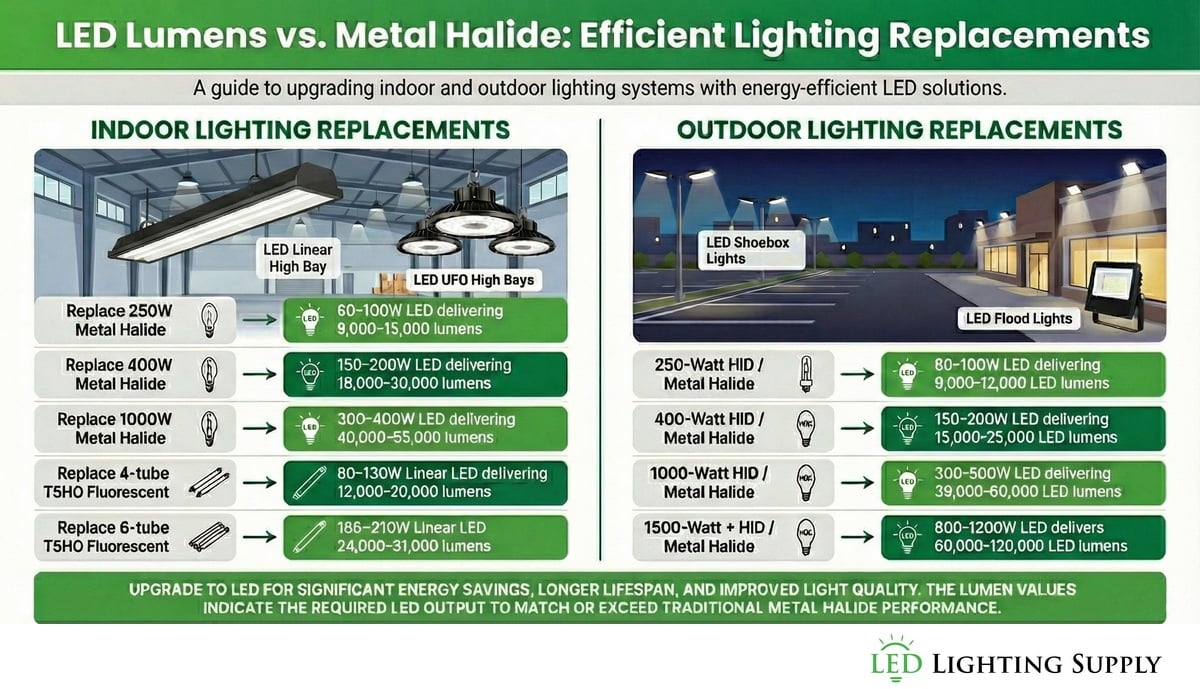
- Hard-to-reach fixtures requiring lifts or after-hours access, such as LED high bay lights installed in warehouse facilities
Calculate Energy Savings Accurately:
- LED efficiency improvements can significantly reduce your electric bill
- Consider the impact on both energy charges (kWh) and demand charges (kW). Demand charges (the fee for peak power usage) can represent substantial savings opportunities
- Understand that kilowatts measure power demand while kilowatt-hours (kWh) measure total energy consumption. Both factors affect your utility costs and ROI calculations
Step 3: Secure Rebates and Incentives
- Third-party financial support strengthens your ROI case through utility rebates, federal tax incentives, or other energy efficiency programs
- Apply for rebates early in the planning process to secure commitment letters specifying eligible work and exact funding amounts
- Research available programs through your local utility company and state energy offices
Implementation and Safety Considerations
Important: Lighting retrofits and installations should be performed by qualified electrical contractors to ensure compliance with local electrical codes and safety requirements. Always consult with professionals for proper fixture selection, installation, and system integration.
Next Steps for Your Lighting Upgrade
As a facility manager, you balance maintenance demands, budget constraints, code compliance, and operational efficiency daily. LED lighting systems align with these priorities by providing reliable, low-maintenance solutions that support your organization’s bottom line.
Success depends on understanding your organization’s specific priorities and goals. Include these considerations in your upgrade proposal to demonstrate alignment with broader business objectives, making your case more compelling to decision-makers.
Ready to start your lighting upgrade? Contact our commercial lighting specialists for a facility assessment, or use our energy savings calculator to estimate your potential ROI.