Choosing the Right High Bay Fixture for a Gymnasium or Fitness Center
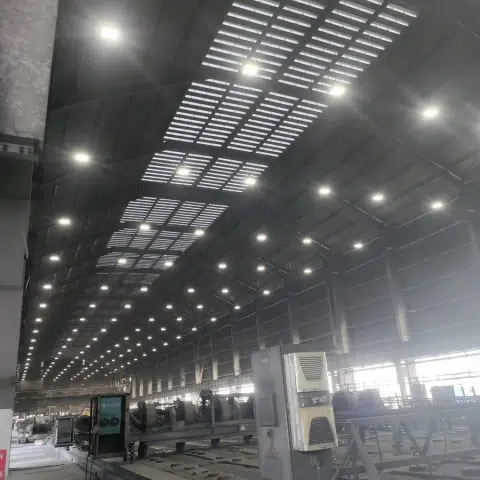
When you’re planning lighting for a school gym, athletic court, or a fitness facility, the fixture type matters for more than just brightness. Ceiling height, layout, and how the space is used all influence what works best. The most common LED gym lighting setups utilize LED high bay lights for gyms and fitness centers, typically UFO or linear designs, to provide useful illumination, reduce maintenance compared with many legacy systems, and support compatible controls such as dimming and occupancy sensors.
Start Here: Gymnasium vs. Fitness Center
Before comparing fixtures, separate the project into the right category. These spaces often look similar, but their lighting priorities are different.
- Gymnasiums (ball sports, courts, school athletics): The biggest difference is impact risk. If balls are in the air, fixture selection should account for direct strikes, mounting security, and the manufacturer’s documented suitability for the application.
- Fitness centers (weights, cardio, studios, multi-purpose workout areas): Layout and visual comfort tend to matter most. Uniformity, glare control, and the intended atmosphere often drive the decision.
Impact Ratings Matter in Ball Strike Areas
In school gyms and athletic courts, fixtures can take direct hits. An IK rating indicates resistance to a defined mechanical impact test under IEC 62262. For example, IK08 represents a 5-joule impact rating. It can be useful durability information, but it does not by itself establish that a fixture is suitable for sports-ball impacts, repeated ball strikes, or a specific court installation.
Practical takeaway: If fixtures are installed over a court where basketballs, volleyballs, or other equipment regularly reach the fixture plane, look for manufacturer documentation specifically addressing ball-impact or sports-use suitability. Confirm any required protective guard, mounting method, and fixture location with the facility’s design requirements. An IK08 rating may be a helpful supplemental specification, but it should not be the only basis for selection.
Choosing Between UFO and Linear High Bays
Electricians and facility managers typically choose between UFO LED high bays and linear LED high bays because their distributions, mounting options, and physical forms can suit different layouts.
- UFO high bays: Often selected for higher ceilings, compact fixture layouts, and applications needing a particular beam distribution. Available durability, impact, and environmental features vary by model.
- Linear high bays: Often selected for rectangular spaces and layouts where a broad distribution and visual comfort are priorities.
Rule of thumb: UFO and linear high bays can both work in gym and fitness applications. The best choice depends on ceiling height, mounting locations, glare considerations, required illuminance, and fixture-specific photometric data. Many facilities use both by zone.

Gymnasium High Bay Selection (School Gyms, Courts, Field Houses)
Gymnasiums hosting athletic activities need lighting selected for the expected impact exposure and mounting conditions. UFO high bay lights are commonly used in K-12 gyms and court environments because their compact form can suit higher mounting locations. Confirm the selected fixture’s documented ball-impact suitability where direct strikes are expected.
Typical Gymnasium Illumination Targets (Foot-Candles)
These are general planning ranges, not universal code requirements. Required light levels and uniformity depend on the activity, level of competition, governing organization, camera or broadcast needs, surface reflectances, and local project requirements. A fixture-specific photometric plan should be used to evaluate delivered foot-candles and uniformity.
| Assemblies | 10-20 fc |
| General Exercise and Recreation | 20-50 fc |
| Locker Rooms | 10-30 fc |
| Exhibitions, Competitive Events | 40-60 fc |
| School Gymnasiums | 30-70 fc |
| Public Gymnasiums | 40-70 fc |
Gym-focused checklist:
- Ball-strike suitability: For areas subject to ball strikes, verify manufacturer documentation for sports-ball impact suitability; use an IK rating only as supplemental mechanical-impact information.
- Fixture type: UFO high bays are a common option for court spaces, but fixture distribution and mounting should be evaluated with a photometric layout.
- Controls: Choose fixtures with compatible dimming drivers and occupancy-control options if the space is used intermittently.
To view our collection of gymnasium-ready lights, follow here: LED gymnasium lights.

Fitness Center High Bay Selection (Workout Floors, Weight Rooms, Multi-Purpose Areas)
Fitness centers and training facilities often prioritize inviting light, visual comfort, and appropriate illumination for the task. These spaces can use a mix of UFO high bays, linear high bays, and, in lower-ceiling areas, other fixture types such as low bays or panels. When ceiling heights are in the high-bay range, linear high bays are commonly considered for their broad distribution and modern appearance.
Typical Fitness Center Illumination Targets (Foot-Candles)
These are general planning ranges. Actual targets should be established for the activities, finishes, layout, and applicable project requirements, then verified with fixture-specific photometric calculations.
| General Workout Areas | 30-50 fc |
| Group Exercise Rooms | 20-40 fc |
| Locker Rooms | 10-30 fc |
| Reception and Lobby Areas | 20-50 fc |
| Specialized Training Areas | 30-50 fc |
| Pool Areas | 50-100 fc |
Fitness-focused checklist:
- Uniformity and comfort: Linear high bays can suit structured layouts where broad, even coverage is important. Review photometric data and fixture placement to manage glare and shadows.
- Controls readiness: Prioritize fixtures with compatible 0-10V or 1-10V dimming drivers and occupancy-control options where appropriate.
- Flexibility: Wattage-adjustable and color-selectable options, when available, can provide installation flexibility. Confirm that the selected setting still meets the lighting plan.
Replacing Metal Halide and Fluorescent Gym Lighting
Many gymnasiums and athletic facilities are still running older 400W metal halide systems or fluorescent high bay setups. LED gymnasium lights are commonly specified as replacements, typically using UFO or linear high bay designs on higher ceilings. LED input wattage and fixture quantity should be determined from the existing lighting performance, required light levels, fixture photometry, mounting height, and control strategy rather than a direct watt-for-watt comparison.
- Metal halide replacement: 5000K is often selected for a cool, crisp white appearance. CCT describes the apparent color of white light; it does not determine brightness or directly replicate the color characteristics of every metal halide system.
- Fluorescent replacement: 4000K is a common neutral-white choice. Existing fluorescent lamps may vary in CCT and color rendering, so compare specifications when color appearance is important.
- If you can’t decide: Some fixtures include field-selectable CCT switches that allow selection from the manufacturer’s available settings. Verify the selected setting before final commissioning.

Dimming and Motion Sensors: A Practical Control Strategy for Gyms
One of the biggest functional upgrades with LED is control capability. Many LED gym lighting fixtures are available with 0-10V or 1-10V dimming drivers, allowing different light levels for different activities when paired with compatible controls. Occupancy sensors can be used to dim or switch lighting when spaces are unoccupied, which can be useful in gyms that sit empty between classes, outside practice hours, or during off-peak periods. Sensor coverage, time delays, daylight contribution, and the needs of occupants should be considered during control design.
- Dimming drivers: Look for fixtures equipped with 0-10V or 1-10V dimming where those controls are planned.
- Sensor compatibility: Many fixtures are control-ready or offer compatible microwave or PIR sensors, depending on model.
- Instant-on behavior: LED fixtures generally reach operating light output much faster than metal halide systems, which often require warm-up and restrike time.
Common Mistakes to Avoid
- Using a standard high bay over ball courts without verifying suitability: Where balls are flying, verify documented sports-ball-impact suitability, required guards, and mounting details. An IK08 rating alone does not establish this suitability.
- Choosing non-dimmable fixtures when controls are planned: Occupancy sensors and event-based controls require compatible drivers, controls, and wiring.
- Ignoring placement and beam behavior: Poor placement can create glare, shadows, or uneven coverage that affects the use of the space.
- Not verifying voltage needs: Driver options may include 100-277V or 277-480V configurations; verify the exact fixture specification and available supply voltage.
- Skipping photometric analysis: Wattage, mounting height, spacing, and beam distribution should be evaluated using actual fixture IES data rather than fixed rules of thumb.
Safety and Performance Certifications
Gym and fitness facilities are public-facing environments, so fixture compliance matters. Depending on the model and project requirements, LED fixtures may carry:
- UL Listed, ETL Listed, or another applicable NRTL certification for electrical safety evaluation
- DLC or DLC Premium qualification for eligible products’ efficiency and performance criteria; DLC qualification is not an electrical safety certification
Verify the exact listing, qualification, voltage, controls, and environmental rating on the selected product specification sheet.
Warranty and Warranty Support
Warranty terms vary by fixture model. Many LED gym and high-bay fixtures include multi-year limited warranties; verify the warranty duration, coverage, exclusions, and support process for the specific product before purchase. LED Lighting Supply can assist customers with warranty claims for products purchased through us, subject to the applicable manufacturer warranty terms.
Quick Summary: Picking the Right Fixture
- If the space is a true gymnasium with ball sports, start by verifying documented sports-ball-impact suitability, mounting requirements, and any protective guard needs for the selected fixture. An IK08 rating can be useful supplemental impact information but is not a ball-strike certification.
- If the space is a fitness center or structured workout layout, linear high bays are commonly considered for broad distribution and visual comfort, with UFO fixtures used where their distribution and form factor fit the layout.
- If you’re replacing older systems, use fixture-specific photometric analysis to select LED wattage and quantity. LED high bays can often reduce input wattage compared with metal halide or fluorescent systems, but a stated LED wattage is not a universal replacement for a particular legacy wattage.
- If controls matter: Choose fixtures with compatible 0-10V or 1-10V dimming drivers and occupancy-sensor options for the intended control strategy.