IK Impact Rating Chart for LED Light Fixtures
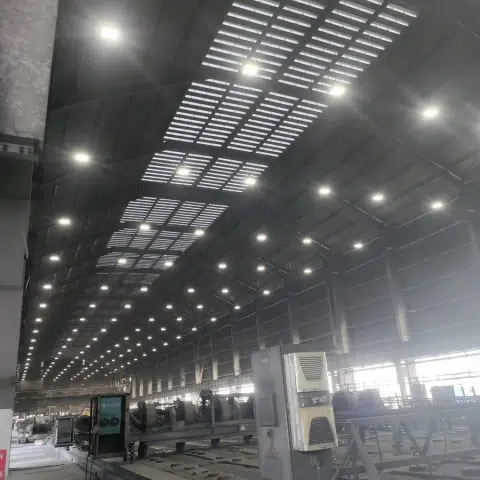
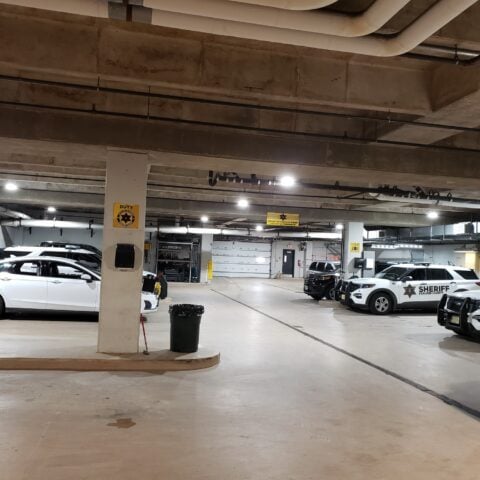
LED lights are commonly used in commercial lighting, industrial lighting, and sports lighting applications. They are typical lighting that you find in common commercial and industrial applications: LED warehouse lighting, LED parking lot lights, LED manufacturing lighting, LED lights for gymnasiums, and demanding industrial applications.
LED fixtures are chosen for their cost-effectiveness and potential energy savings compared to traditional lighting technologies.
However, in certain applications, cost savings alone aren’t enough. Some environments require fixtures that are rugged, robust, and impact-resistant.
These fixtures must withstand bumps, hits, and strikes while continuing to operate reliably, helping ensure fixture longevity and minimizing maintenance disruptions.

For activities like tennis, basketball, hockey, and other sports, unintentional ball strikes should not disrupt the light’s operation. The IK code of a fixture indicates its level of protection against impacts, bumps, and hits from external objects.
What Is an IK Code?
The IK code measures the level of protection a lighting fixture’s enclosure provides against external impacts. The IK code originated from a European impact standard (BS EN 50102), which became an international standard in 2002, renumbered as EN 62262.
Previously, an additional digit was added to a fixture’s IP rating, such as IP67(9), where the (9) designated its IK code. This system was non-standard, so a new standardized system was developed using two digits to designate a fixture’s impact resistance level.

What Is the IK Rating?
The IK rating consists of two digits, ranging from IK01 to IK10. Higher numbers indicate stronger protection levels. The rating is measured in joules (a unit of energy measurement) to test impact resistance. Testing involves three types of standardized hammers:
- Pendulum hammer – Tests impacts from IK01 to IK06
- Spring hammer – Tests impacts from IK07 to IK10
- Free-fall hammer – Applicable across the entire range
If a fixture exceeds IK10 protection levels, it may be rated as IK10+.
IK Rating Scale
Here are the ratings defining the level of impact protection:
- IK00: No protection against impacts.
- IK01: Protected against 0.14 joules (equivalent to a 0.25-kg object dropped from 56 mm).
- IK02: Protected against 0.2 joules (equivalent to a 0.25-kg object dropped from 80 mm).
- IK03: Protected against 0.35 joules (equivalent to a 0.25-kg object dropped from 140 mm).
- IK04: Protected against 0.5 joules (equivalent to a 0.25-kg object dropped from 200 mm).
- IK05: Protected against 0.7 joules (equivalent to a 0.25-kg object dropped from 280 mm).
- IK06: Protected against 1 joule (equivalent to a 0.25-kg object dropped from 400 mm).
- IK07: Protected against 2 joules (equivalent to a 0.5-kg object dropped from 400 mm).
- IK08: Protected against 5 joules (equivalent to a 1.7-kg object dropped from 300 mm).
- IK09: Protected against 10 joules (equivalent to a 5-kg object dropped from 200 mm).
- IK10: Protected against 20 joules (equivalent to a 5-kg object dropped from 400 mm).
Application of IK Codes
How do you select fixtures with the appropriate IK code for your needs? Understanding the potential impact of threats to your fixtures will help determine the IK rating required.
Recommended Applications by IK Rating:
- IK06-IK07: Standard commercial environments with minimal impact risk
- IK08: Sports facilities, warehouses with moving equipment, high-traffic areas
- IK09-IK10: Industrial environments, areas with heavy machinery, vandal-prone locations
Many of our impact-resistant fixtures offer IK08 or higher protection. For example:
- All our LED UFO high bays are IK08 rated.
- Our LED explosion proof lights are IK10 rated.
- We offer IK08-rated LED shoebox lights / parking lot lights.
- We also have LED flood lights and LED stadium lights that are IK08 impact rated.
Each fixture’s IK rating is clearly listed alongside its specifications, enabling you to select the ideal product for your application.
Important: Proper installation by qualified electricians is recommended for all commercial and industrial lighting applications. Consider local building codes and safety requirements when selecting fixtures.