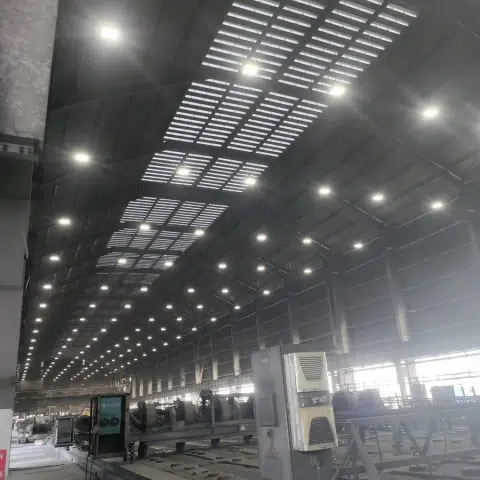
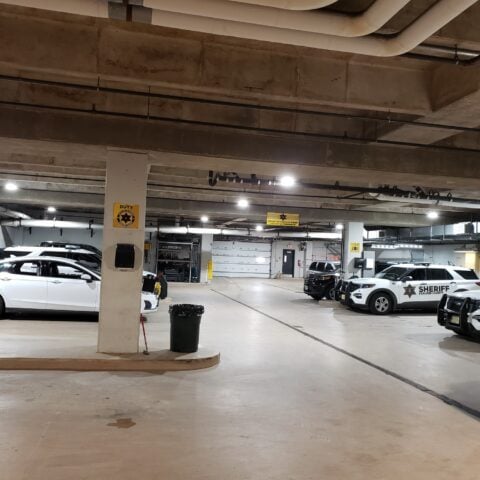
When to Use Vapor Proof Lights vs. Explosion Proof Lights (C1D1 / C1D2)
If you work in manufacturing, wastewater, or chemical handling, you may have heard the terms vapor proof, hazardous location, and explosion proof. They should not be used interchangeably. Choosing the wrong fixture isn’t merely a performance issue. It can lead to code violations, safety incidents, and serious ignition risks in hazardous environments. This guide explains when to use LED vapor tight lights, and when to use explosion proof lighting, and the real-world impacts of using fixtures outside their intended environment.
Important Rules (Read This First)
- Vapor proof fixtures, or vapor tight fixtures, prevent washdown water, dust, humidity, corrosion, and non-ignitable vapors from entering the fixture in damp or cold environments.
- Explosion proof or hazardous location fixtures are engineered to contain internal ignition sources, preventing ignition of surrounding flammable gases, vapors, or combustible dust.
- Never use vapor proof fixtures in a classified hazardous or explosive atmosphere unless they have the appropriate UL844 rating. Verify classification to select a properly listed hazardous location fixture.
The National Fire Protection Association (NFPA) 70, or National Electrical Code (NEC), defines requirements for electrical equipment in hazardous locations. Qualified professionals evaluate materials, concentrations, and operating conditions to ensure safety. All hazardous location products are Class and Division rated. The product rating must match the space’s requirements.
What “Vapor Proof” Really Means
LED vapor proof fixtures use sealed housings and gaskets to protect drivers and LED boards while resisting corrosion. Many units meet an IP65 wet-location level or higher.
What vapor proof lights do well:
- Prevent moisture intrusion from humidity, washdowns, and condensation
- Keep dust and debris out of electronics and optics
- Survive harsh industrial environments, including food plants, car washes, cold storage, and barns
- Maintain light output in cold conditions where fluorescent lights struggle
What vapor proof lights are NOT built to do:
- Contain an internal explosion: No flame paths or explosion-containment design
- Prevent ignition of surrounding flammable atmospheres during a component failure
- Meet hazardous location listings like UL844 for Class/Division areas
Bottom line: “Sealed” is about ingress protection. “Explosion proof” is about ignition containment and hazardous location compliance.
When To Use LED Vapor Proof Lights
Choose vapor proof fixtures when the problem is environmental exposure, not ignitable atmospheres. They offer maximum ROI and service life in the right applications.
Best Applications for Vapor Proof Lighting
- Food processing & packaging areas: Frequent washdowns, steam, humidity, and sanitation chemicals
- Cold storage & freezers: LEDs provide instant-on and stable output in low temperatures
- Car washes: Direct spray, soaps, constant humidity, overspray demand sealed housings
- Parking garages: Moisture, vehicle exhaust, and dust resistant, reducing repair costs
- Warehouses with washdown zones: Maintenance areas, loading docks, or sanitation zones exposed to water
- Livestock barns & agricultural buildings: Dust, debris, moisture, and ammonia-like contaminants
- Natatoriums / indoor pools: High humidity and chemical exposure that destroys standard fixtures quickly
Why Vapor Proof Lights Aren’t Generally Used in Hazardous Environments
Using a vapor proof fixture in an explosive atmosphere can create an ignition source. Even high-quality vapor proof fixtures can fail electrically: drivers can arc, wiring can loosen, components can overheat, or seals can degrade. In normal industrial spaces, that’s a reliability issue. In Class I hazardous areas, the same failure can cause ignition.
Why: Vapor proof fixtures lack flame paths, threaded joints, and containment structures to cool gases and prevent flame propagation. They are not certified for hazardous locations. The OSHA electrical safety standards emphasize using properly rated equipment to protect workers from ignition sources. Non-rated equipment + ignitable atmosphere = hazard. Always know a space’s Class and Division before selecting fixtures.
What “Explosion Proof” Means in C1D1 and C1D2 Areas
Explosion proof lighting is designed to contain ignition inside the fixture and prevent it from igniting the surrounding atmosphere. North American hazardous locations use Class/Division/Group designations:
- Class I: Flammable gases or vapors
- Class II: Combustible dust
- Division 1 (C1D1): Ignitable concentrations exist during normal operations
- Division 2 (C1D2): Ignitable concentrations present only under abnormal conditions
- Group A: Extremely explosive
- Group B: Very high explosion pressure
- Group C: High ignition potential
- Group D: Most common industrial gases
Key point: Explosion proof is a compliance category, not a style. Fixtures must match the Class/Division/Group of the space.
When You Need C1D1 Explosion Proof Lighting
Use C1D1 fixtures when flammable gases or vapors are present during normal operations.
Best Applications for C1D1 Lighting
- Paint spray booths and finishing rooms
- Certain chemical processing zones
- Fuel handling areas
- Distillation areas (site-specific classification required)
- Enclosures/rooms with limited ventilation
C1D1 is the highest risk level. Fixtures must match the classification and group per code.
When You Need C1D2 Explosion Proof Lighting
Use C1D2 fixtures when flammable gases or vapors may exist only under abnormal conditions.
Best Applications for C1D2 Lighting
- Perimeters around fuel storage/transfer equipment
- Wastewater treatment zones
- Refinery support areas
- Chemical storage rooms with controls
- Process-adjacent manufacturing zones
C1D2 applies where hazardous vapors or liquids are not normally present. Install with compliant wiring and rated components.
Critical Guidance: Two Common Mistakes
1) Vapor Proof Fixtures in Explosive Areas = Dangerous
- IP ratings ≠ hazardous location ratings
- Vapor proof fixtures cannot contain ignition
- Installing in Class I areas creates an ignition risk and code violation
2) Explosion Proof Fixtures in Washdown Environments = Reliability Problem
- Corrosion attacks flame paths and joints
- Washdowns can overwhelm designs not built for high-pressure water
- Maintenance risk increases in wet/dirty areas
- Overkill ≠ better in harsh environments; match construction to exposure
Practical takeaway: Classification dictates explosion proof necessity. Environmental exposure dictates fixture construction and sealing. 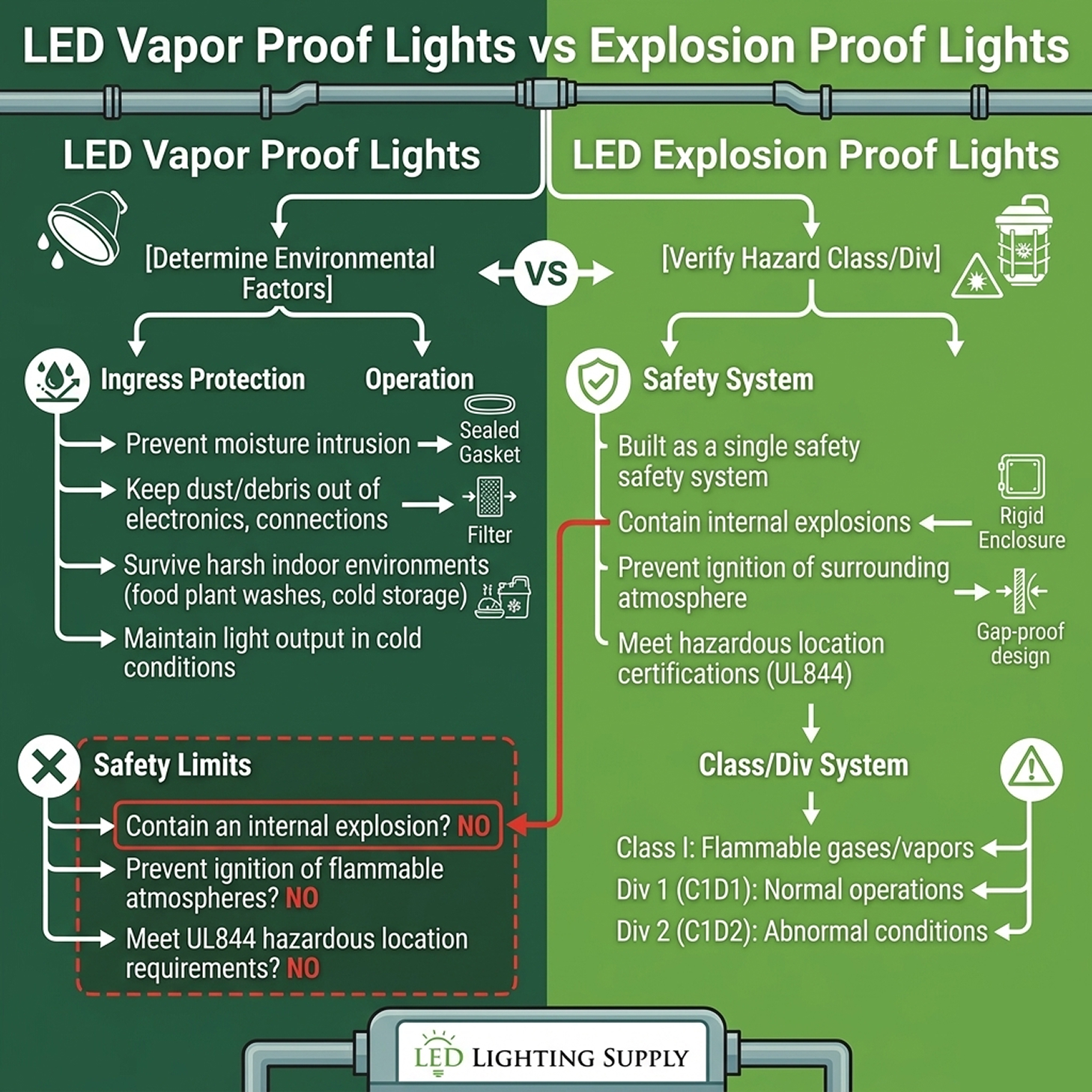
A Simple Selection Checklist for Customers
- Is the area classified? (Class I/II, Division 1/2, Group A-G)
- Are flammable vapors present during normal operations? → C1D1
- Flammable vapors only during abnormal conditions? → C1D2
- If not classified: water, humidity, dust, cold, mild corrosion → vapor proof
- Chemicals hitting the fixture: type, concentration, frequency matter
- Installation: mounting, spacing, wiring, and support affect reliability
For testing and certification, reference UL safety standards and DLC energy efficiency standards. UL844 applies to explosion-proof applications.
Common Mistakes and How to Avoid Them
- “Sealed = safe for fumes” → Sealed protects from ingress; hazardous = ignition containment
- Installing vapor-proof because “last ones worked” → Re-verify classification
- Explosion-proof in washdown zones without a proper IP rating → Check design
- Treating C1D2 as “lighter-duty” → Still hazardous; follow installation standards
Safety and Compliance Notes
Hazardous location lighting affects worker safety and facility risk. Installation should follow certified ratings and compliant methods. Verify if a space is classified before purchasing. Need help? Contact us