LED Lighting Statistics to Know in 2025
Note: The following statistics are compiled from various industry sources and represent general market trends as of recent years. For specific applications or installations, consult with qualified lighting professionals.
LEDs (light-emitting diodes) have become a dominant force in the global lighting market. Traditional lighting technologies like incandescent, halogen, and fluorescent are being phased out in many applications. Over the past decade, LED technology has made significant advancements in quality, efficacy, and versatility, while also becoming increasingly affordable.
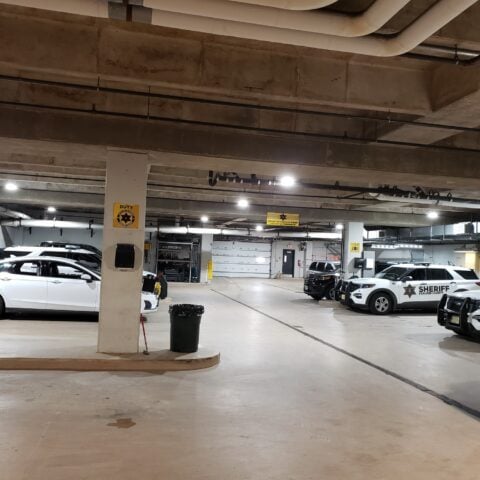
Commercial warehouses are converting to LED warehouse lighting. Sports fields are switching to high-power LED sports field lights and LED stadium lights. Commercial spaces are upgrading their outdoor parking lots with LED parking lot lights.
We’ve compiled informative statistics about LED lighting technology, organized by sector: general market trends, commercial, industrial, residential, and sports applications. This data provides insights into current adoption rates and projected growth.

General LED Market Statistics
Energy Efficiency and Performance
75% Energy Reduction
High-quality LED lamps typically consume at least 75% less energy than comparable incandescent lamps, offering significant energy savings for facility upgrades.
25x Longer Lifespan
High-quality LED lamps can last up to 25 times longer than incandescent lamps, resulting in reduced maintenance costs and a lower frequency of replacements in commercial applications.
Superior Energy Conversion
LEDs convert a much higher percentage of electrical energy into visible light compared to traditional technologies. While incandescent bulbs waste approximately 90% of energy as heat and CFLs waste around 80%, LEDs operate much more efficiently with minimal heat generation.
Market Adoption and Pricing
Decreasing Costs Since 2010
LED lighting prices have fallen considerably since 2010. Early adoption was limited by higher upfront costs, but LEDs are now price-competitive with traditional lighting in most applications.
50% Market Share by 2019
By 2019, LEDs represented nearly half of all lighting sales globally, demonstrating rapid market adoption across multiple sectors.

Technical Performance Improvements
Efficacy Advancement
- Since 2010, LED efficacy has improved approximately 6-8 lumens per watt annually
- Average LED efficacy in the U.S. has doubled to over 100 lm/W, with top-performing products exceeding 120 lm/W
- Residential LEDs commonly achieve 110-130 lm/W, while commercial lighting applications often surpass these levels
- Future LED technology development may potentially reach 250 lm/W within the next decade, significantly outperforming other lighting technologies
Future Market Projections
87% Market Share Expected by 2030
Industry projections suggest LEDs may represent up to 87% of global lighting installations by 2030, with continued rapid adoption across all sectors.
$100 Billion Global Market Size
The global LED market, valued at approximately $70 billion in 2019, is projected to reach nearly $100 billion by 2030. TrendForce projects the LED lighting market will exceed $72 billion in 2022 and $93 billion by 2026, driven by energy efficiency requirements and sustainability goals.
Growth opportunities span upgrading to LED commercial lighting, LED industrial lighting, LED sports lighting, and LED outdoor lighting.
30-40% Reduction in Global Lighting Energy Demand
The transition to energy-efficient LED lighting is estimated to reduce global electricity demand for lighting by 30-40% by 2030, supporting worldwide energy conservation efforts.
Continued Price Reduction
LED pricing is expected to continue declining. Industry projections suggest costs may drop from $0.70 per kilolumen in 2017 to approximately $0.30 per kilolumen by 2035-2050.


Industrial LED Lighting Statistics

Specialized Applications
Horticultural Lighting Growth
LED horticultural lighting applications are expanding rapidly, driven by controlled environment agriculture and specialized growing operations. According to TrendForce data, the horticultural LED lighting market is projected to grow significantly, reaching $1.85 billion globally.
Residential LED Lighting Statistics
Home Adoption Rates
47% Household Adoption by 2020
Between 2015 and 2020, the percentage of households using LED lighting for most or all indoor lighting increased from 4% to 47%, showing rapid residential market acceptance.

Sports LED Lighting Statistics

Professional Installation Recommended: LED lighting installations, particularly in commercial and industrial applications, should be performed by qualified electrical contractors to ensure safety, code compliance, and optimal performance.